Mating pool is a concept used in evolutionary algorithms and means a population of parents for the next population. The mating pool is formed by candidate solutions that the selection operators deem to have the highest fitness in the current population. Solutions that are included in the mating pool are referred to as parents. Individual solutions can be repeatedly included in the mating pool, with individuals of higher fitness values having a higher chance of being included multiple times. Crossover operators are then applied to the parents, resulting in recombination of genes recognized as superior. Lastly, random changes in the genes are introduced through mutation operators, increasing the genetic variation in the gene pool. Those two operators improve the chance of creating new, superior solutions. A new generation of solutions is thereby created, the children, who will constitute the next population. Depending on the selection method, the total number of parents in the mating pool can be different to the size of the initial population, resulting in a new population that’s smaller. To continue the algorithm with an equally sized population, random individuals from the old populations can be chosen and added to the new population. At this point, the fitness value of the new solutions is evaluated. If the termination conditions are fulfilled, processes come to an end. Otherwise, they are repeated. The repetition of the steps result in candidate solutions that evolve towards the most optimal solution over time. The genes will become increasingly uniform towards the most optimal gene, a process called convergence. If 95% of the population share the same version of a gene, the gene has converged. When all the individual fitness values have reached the value of the best individual, i.e. all the genes have converged, population convergence is achieved. == Mating pool creation == Several methods can be applied to create a mating pool. All of these processes involve the selective breeding of a particular number of individuals within a population. There are multiple criteria that can be employed to determine which individuals make it into the mating pool and which are left behind. The selection methods can be split into three general types: fitness proportionate selection, ordinal based selection and threshold based selection. === Fitness proportionate selection === In the case of fitness proportionate selection, random individuals are selected to enter the pool. However, the ones with a higher level of fitness are more likely to be picked and therefore have a greater chance of passing on their features to the next generation. One of the techniques used in this type of parental selection is the roulette wheel selection. This approach divides a hypothetical circular wheel into different slots, the size of which is equal to the fitness values of each potential candidate. Afterwards, the wheel is rotated and a fixed point determines which individual gets picked. The greater the fitness value of an individual, the higher the probability of being chosen as a parent by the random spin of the wheel. Alternatively, stochastic universal sampling can be implemented. This selection method is also based on the rotation of a spinning wheel. However, in this case there is more than one fixed point and as a result all of the mating pool members will be selected simultaneously. === Ordinal based selection === The ordinal based selection methods include the tournament and ranking selection. Tournament selection involves the random selection of individuals of a population and the subsequent comparison of their fitness levels. The winners of these “tournaments” are the ones with the highest values and will be put into the mating pool as parents. In ranking selection all the individuals are sorted based on their fitness values. Then, the selection of the parents is made according to the rank of the candidates. Every individual has a chance of being chosen, but higher ranked ones are favored === Threshold based selection === The last type of selection method is referred to as the threshold based method. This includes the truncation selection method, which sorts individuals based on their phenotypic values on a specific trait and later selects the proportion of them that are within a certain threshold as parents.
Play Integrity API
Play Integrity API (formerly known as SafetyNet) consists of several application programming interfaces (APIs) offered by the Google Play Services to support security sensitive applications and enforce DRM. Currently, these APIs include device integrity verification, app verification, recaptcha and web address verification. It uses an environment called DroidGuard to perform the attestation. == Attestation == The SafetyNet Attestation API, one of the APIs under the SafetyNet umbrella, provides verification that the integrity of the device is not compromised. In practice, non-official ROMs such as LineageOS fail the hardware attestation and thus prevent the user from using a non-compliant ROM with third-party apps (mainly banking) that require the API. Due to this, some consider this a monopolistic practice deterring the entrance of competing mobile operating systems in the market. It requires a network connection to Google servers and validates the hardware signatures. Amongst the checks, the API looks for bootloader unlock status, ROM signatures, kernel strings, it also uses AVB2.0 and dm-verity attestations. Upon successful checks, Google Play will mark the device as Certified. The attestation runs in an environment called DroidGuard (com.google.android.gms.unstable). The SafetyNet Attestation API (one of the four APIs under the SafetyNet umbrella) has been deprecated. As of 6 October 2023, Google planned to replace it with the Play Integrity API by the end of January 2025. The transition ended on 20 May 2025, breaking applications which hadn't been updated. These attestations are offered by Google Play Services and thus are not available on free Android environments, like AOSP. Therefore, developers can require the API to be available and may refuse to execute on AOSP builds. == Google Play Protect == Under the same umbrella, Play Protect is a mechanism to find and remove "vulnerable" apps from one's Android device as well as store apps. Although it's meant to scan for malware-containing apps, it also looks for non-DRM compliant apps. == Criticism == Multiple groups have criticised SafetyNet and the Play Integrity API. Criticisms include that it offers weaker protection compared to alternatives such as Android's hardware attestation API, which provides a stronger form of verification while having the ability to remain compatible with more secure Android operating systems like GrapheneOS. Critics argued it undermines competition by effectively requiring developers to rely on Google's proprietary services, strengthening its monopoly over the Android ecosystem and disadvantaging alternative, privacy-focused operating systems. Users have also developed tools, such as the Play Integrity Fix module for Magisk/KernelSU/APatch, which tricks the attestation using leaked fingerprints of vulnerable devices. Furthermore, some have questioned the effectiveness of the attestation, claiming it does not deliver the level of security promised by Google and instead serves more as a form of vendor lock-in than a meaningful security measure. Activists have also raised concerns that it may violate antitrust and competition laws, like the Digital Markets Act.
Back-Up Interceptor Control
Backup Interceptor Control (BUIC, ) was the Electronic Systems Division 416M System to backup the SAGE 416L System in the United States and Canada. BUIC deployed Cold War command, control, and coordination systems to SAGE radar stations to create dispersed NORAD Control Centers. == Background == Prior to the SAGE Direction Centers becoming operational, the USAF deployed data link systems at NORAD Control Centers with ground computers for controlling crewed interceptors. After SAGE IBM AN/FSQ-7 Combat Direction Centrals became operational and the Super Combat Centers with improved (digital) computers were cancelled, a backup to SAGE was planned in the event the above-ground SAGE Air Defense Direction Center failed. == General Electric AN/GPA-37 Course Directing Group == BUIC began with deployment of General Electric AN/GPA-37 Course Directing Groups to several Long Range Radar stations. Units designated included the "U.S. Air Force 858th Air Defense Group (BUIC) [which became] a permanent operating facility" at Naval Air Station Fallon in Nevada. == BUIC II == BUIC II was used to command and control sites using the Burroughs AN/GSA-51 Radar Course Directing Group. North Truro AFS became the first ADC installation configured for BUIC II. == BUIC III == The AN/GYK-19 (initially AN/GSA-51A) was an upgraded version of the BUIC II system designated AN/GSA-51A and required a larger building than the AN/GSA-51. The first BUIC III site was Fort Fisher AFS, and Air Defense Command's was first installed at Fort Fisher Air Force Station, North Carolina. Although more advanced systems were contemplated, the final design of the BUIC III system was an upgraded version of the BUIC II with around twice the performance. == Closure and upgrade == In 1972, the USAF decided to shut down most of the BUIC sites; most of the sites mothballed by 1974, except for the BUIC III site at Tyndall Air Force Base. In Canada the BUIC site at Senneterre was shut down, but St Margarets remained open. The remaining sites were closed between 1983-1984 when SAGE was replaced by the Joint Surveillance System. The AN/FYQ-47 Common Digitizer for the Joint Surveillance System, and the Radar Video Data Processor (RVDP) was a combined system for the Air Force and Federal Aviation Administration (FAA), it replaced the SAGE Burroughs AN/FST-2 Coordinate Data Transmitting Sets.
Internet Security Alliance
Internet Security Alliance (ISA) was founded in 2001 as a non-profit collaboration between Carnegie Mellon University's CyLab and Electronic Industries Alliance, a federation of trade associations. The Internet Security Alliance is focused on cyber security, acting as a forum for information sharing and leadership on information security, and lobbying for corporate security interests. == International operations == The Internet Security Alliance operates with a global membership to provide international security for its partners. The organization's membership includes companies located on four continents, and the Executive Committee always includes at least one non-U.S.-based company. The Internet Security Alliance believes that international communication is crucial for long-term greater information security, as it allows for a more realistic approach to addressing the many challenges faced by users of the Internet. == Publications == Published in 2009, The Financial Impact of Cyber Risk is the first known guidance document to attempt to approach the financial impact of cyber risks from the perspective of core business functions. It claims to provide guidance to CFOs and their colleagues responsible for legal issues, business operations and technology, privacy and compliance, risk assessment and insurance, and corporate communications.
IWARP
iWARP is a computer networking protocol that implements remote direct memory access (RDMA) for efficient data transfer over Internet Protocol networks. Contrary to some accounts, iWARP is not an acronym. Because iWARP is layered on Internet Engineering Task Force (IETF)-standard congestion-aware protocols such as Transmission Control Protocol (TCP) and Stream Control Transmission Protocol (SCTP), it makes few requirements on the network, and can be successfully deployed in a broad range of environments. == History == In 2007, the IETF published five Request for Comments (RFCs) that define iWARP: RFC 5040 A Remote Direct Memory Access Protocol Specification is layered over Direct Data Placement Protocol (DDP). It defines how RDMA Send, Read, and Write operations are encoded using DDP into headers on the network. RFC 5041 Direct Data Placement over Reliable Transports is layered over MPA/TCP or SCTP. It defines how received data can be directly placed into an upper layer protocols receive buffer without intermediate buffers. RFC 5042 Direct Data Placement Protocol (DDP) / Remote Direct Memory Access Protocol (RDMAP) Security analyzes security issues related to iWARP DDP and RDMAP protocol layers. RFC 5043 Stream Control Transmission Protocol (SCTP) Direct Data Placement (DDP) Adaptation defines an adaptation layer that enables DDP over SCTP. RFC 5044 Marker PDU Aligned Framing for TCP Specification defines an adaptation layer that enables preservation of DDP-level protocol record boundaries layered over the TCP reliable connected byte stream. These RFCs are based on the RDMA Consortium's specifications for RDMA over TCP. The RDMA Consortium's specifications are influenced by earlier RDMA standards, including Virtual Interface Architecture (VIA) and InfiniBand (IB). Since 2007, the IETF has published three additional RFCs that maintain and extend iWARP: RFC 6580 IANA Registries for the Remote Direct Data Placement (RDDP) Protocols published in 2012 defines IANA registries for Remote Direct Data Placement (RDDP) error codes, operation codes, and function codes. RFC 6581 Enhanced Remote Direct Memory Access (RDMA) Connection Establishment published in 2011 fixes shortcomings with iWARP connection setup. RFC 7306 Remote Direct Memory Access (RDMA) Protocol Extensions published in 2014 extends RFC 5040 with atomic operations and RDMA Write with Immediate Data. == Protocol == The main component in the iWARP protocol is the Direct Data Placement Protocol (DDP), which permits the actual zero-copy transmission. DDP itself does not perform the transmission; the underlying protocol (TCP or SCTP) does. However, TCP does not respect message boundaries; it sends data as a sequence of bytes without regard to protocol data units (PDU). In this regard, DDP itself may be better suited for SCTP, and indeed the IETF proposed a standard RDMA over SCTP. To run DDP over TCP requires a tweak known as marker PDU aligned (MPA) framing to guarantee boundaries of messages. Furthermore, DDP is not intended to be accessed directly. Instead, a separate RDMA protocol (RDMAP) provides the services to read and write data. Therefore, the entire RDMA over TCP specification is really RDMAP over DDP over either MPA/TCP or SCTP. All of these protocols can be implemented in hardware. Unlike IB, iWARP only has reliable connected communication, as this is the only service that TCP and SCTP provide. The iWARP specification omits other features of IB, such as Send with Immediate Data operations. With RFC 7306, the IETF is working to reduce these omissions. == Implementation == Because a kernel implementation of the TCP stack can be seen as a bottleneck, the protocol is typically implemented in hardware RDMA network interface controllers (rNICs). As simple data losses are rare in tightly coupled network environments, the error-correction mechanisms of TCP may be performed by software while the more frequently performed communications are handled strictly by logic embedded on the rNIC. Similarly, connections are often established entirely by software and then handed off to the hardware. Furthermore, the handling of iWARP specific protocol details is typically isolated from the TCP implementation, allowing rNICs to be used for both as RDMA offload and TCP offload (in support of traditional sockets based TCP/IP applications). The portion of the hardware implementation used for implementing the TCP protocol is known as the TCP Offload Engine (TOE). TOE itself does not prevent copying on the reception side, and must be combined with RDMA hardware for zero-copy results. The RDMA / TCP specification is a set of different wire protocols intended to be implemented in hardware (though it seems feasible to emulate it in software for compatibility but without the performance benefits). == Interfaces == iWARP is a protocol, not an implementation, but defines protocol behavior in terms of the operations that are legal for the protocol, known as Verbs. As such, iWARP does not have any single standard programming interface. However, programming interfaces tend to very closely correspond to the Verbs. Several programmatic interfaces have been proposed, including OpenFabrics Verbs, Network Direct, uDAPL, kDAPL, IT-API, and RNICPI. Implementations of some of these interfaces are available for different platforms, including Windows and Linux. == Services available == Networking services implemented over iWARP include those offered in the OpenFabrics Enterprise Distribution (OFED) by the OpenFabrics Alliance for Linux operating systems, and by Microsoft Windows via Network Direct. NVMe over Fabrics (NVMEoF) iSCSI Extensions for RDMA (iSER) Server Message Block Direct (SMB Direct) Sockets Direct Protocol (SDP) SCSI RDMA Protocol (SRP) Network File System over RDMA (NFS over RDMA) GPUDirect
Non-human
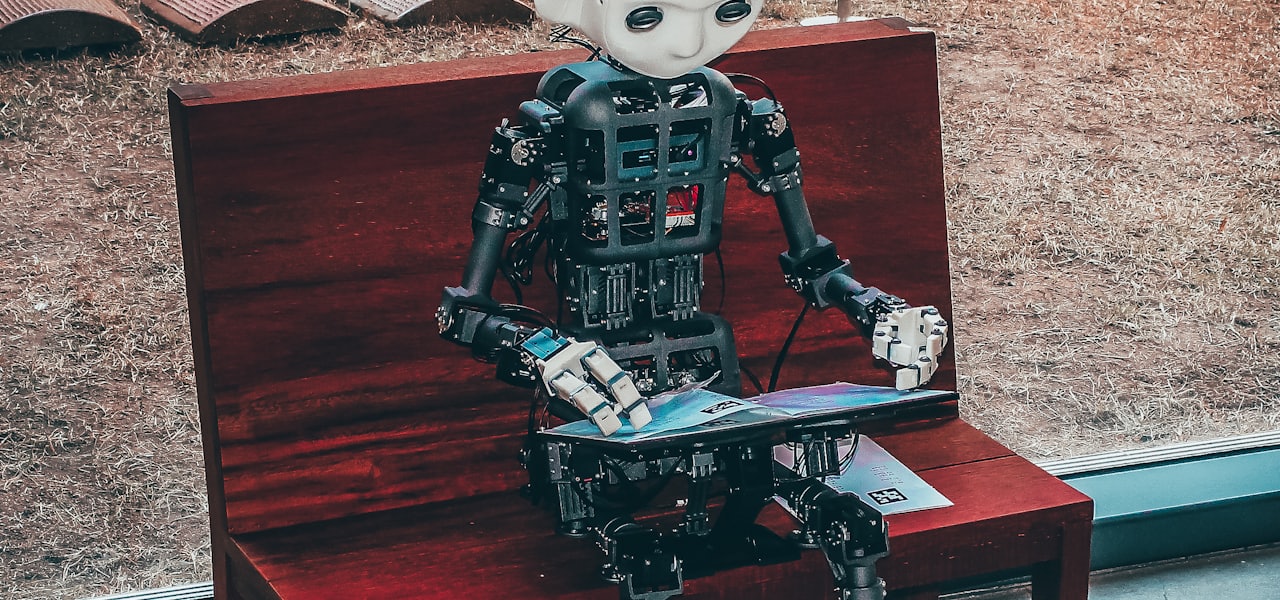
Non-human (also spelled nonhuman) is any entity displaying some, but not enough, human characteristics to be considered a human. The term has been used in a variety of contexts and may refer to objects that have been developed with human intelligence, such as robots or vehicles. == Organisms == === Animal rights and personhood === In the animal rights movement, it is common to distinguish between "human animals" and "non-human animals". Participants in the animal rights movement generally recognize that non-human animals have some similar characteristics to those of human persons. For example, various non-human animals have been shown to register pain, compassion, memory, and some cognitive function. Some animal rights activists argue that the similarities between human and non-human animals justify giving non-human animals rights that human society has afforded to humans, such as the right to self-preservation, and some even wish for all non-human animals or at least those that bear a fully thinking and conscious mind, such as vertebrates and some invertebrates such as cephalopods, to be given a full right of personhood. === The non-human in philosophy === Contemporary philosophers have drawn on the work of Henri Bergson, Gilles Deleuze, Félix Guattari, and Claude Lévi-Strauss (among others) to suggest that the non-human poses epistemological and ontological problems for humanist and post-humanist ethics, and have linked the study of non-humans to materialist and ethological approaches to the study of society and culture. == Software and robots == The term non-human has been used to describe computer programs and robot-like devices that display some human-like characteristics. In both science fiction and in the real world, computer programs and robots have been built to perform tasks that require human-computer interactions in a manner that suggests sentience and compassion. There is increasing interest in the use of robots in nursing homes and to provide elder care. Computer programs have been used for years in schools to provide one-on-one education with children. The Tamagotchi toy required children to provide care, attention, and nourishment to keep it "alive".
Private message
In computer networking, a private message (PM), or direct message (DM), refers to a private communication, often text-based, sent or received by a user of a private communication channel on any given platform. Unlike public posts, PMs are only viewable by the participants. Long a function present on IRCs and Internet forums, private channels for PMs have also been prevalent features on instant messaging (IM) and on social media networks. It may be either synchronous (e.g. on an IM) or asynchronous (e.g. on an Internet forum). The term private message (PM) originated as a feature on internet forums, while the term direct message (DM) originated as a feature on Twitter. Due to the popularity of the latter service, DM has since been appropriated by other platforms, such as Instagram, and is often genericized in popular usage. == Overview == There are two main types of private messages, and one obscure type: One type includes those found on IRCs and Internet forums, as well as on social media services like Twitter, Facebook, and Instagram, where the focus is public posting, PMs allow users to communicate privately without leaving the platform. The second type are those relayed through instant messaging platforms such as WhatsApp and Snapchat, where users join the networks primarily to exchange PMs. A third type, peer-to-peer messaging, occurs when users create and own the infrastructure used to transmit and store the messages; while features vary depending on application, they give the user full control over the data they transmit. An example of software that enables this kind of messaging is Classified-ads. Besides serving as a tool to connect privately with friends and family, PMs have gained momentum in the workplace. Working professionals use PMs to reach coworkers in other spaces and increase efficiency during meetings. Although useful, using PMs in the workplace may blur the boundary between work and private lives. Some common forms of private messaging today include Facebook messaging (sometimes referred to as "inboxing"), Twitter direct messaging, and Instagram direct messaging. These forms of private messaging provide a private space on a usually public site. For instance, most activity on Twitter is public, but Twitter DMs provide a private space for communication between two users. This differs from mediums like email, texting, and Snapchat, where most or all activity is always private. Modern forms of private messaging may include multimedia messages, such as pictures or videos. == History == Email was first developed to send messages between different computers on ARPANET in 1971. Access to ARPANET was primarily limited to universities and other research institutions. Starting in 1983 or 1984, FidoNet allowed home computer users to send and receive email via bulletin board systems. Information services such as CompuServe, America Online, and Prodigy also helped to popularizes online messaging. The advent of the public World Wide Web in 1993 increased access to email via internet service providers, and later via webmail. Instant messaging systems became popular in the mid 1990s, as Internet access improved and personal computers became more common. The introduction of Skype in 2003 popularized Internet-based voice and video messaging. Direct messaging is now a feature of all major social networking services. == Privacy concerns == In January 2014, Matthew Campbell and Michael Hurley filed a class-action lawsuit against Facebook for breaching the Electronic Communications Privacy Act. They alleged that private messages which contained URLs were being read and used to generate profit, through data mining and user profiling, and that it was misleading for Facebook to refer to the functionality as "private" with the implication that the communication was "free from surveillance". In 2012, some Facebook users misinterpreted a redesign of the Facebook wall as publicly sharing private messages from 2008–2009. These were found to be public wall posts from those years, made at a time when it was not possible to like or comment on a wall post, making the notes look like private messages.