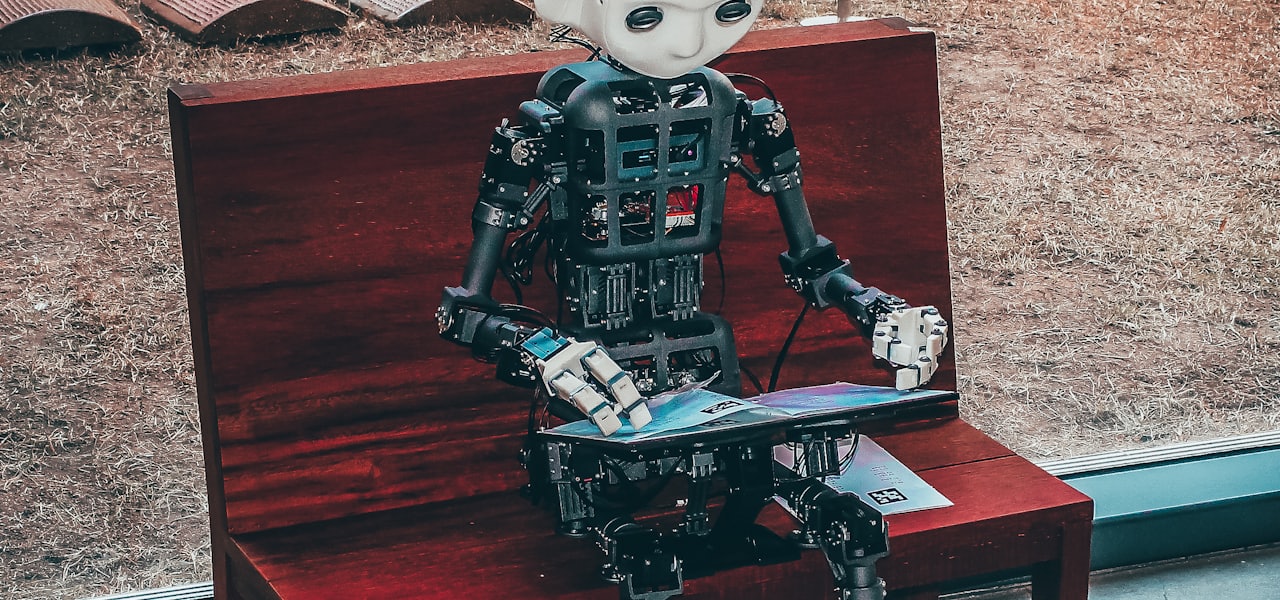
3DCoat is a commercial digital sculpting program from Pilgway designed to create free-form organic and hard surfaced 3D models, with tools which enable users to sculpt, add polygonal topology (automatically or manually), create UV maps (automatically or manually), texture the resulting models with natural painting tools, and render static images or animated "turntable" movies. The program can also be used to modify imported 3D models from a number of commercial 3D software products by means of plugins called Applinks. Imported models can be converted into voxel objects for further refinement and for adding high resolution detail, complete UV unwrapping and mapping, as well as adding PBR textures for displacement, bump maps, specular and diffuse color maps. A live connection to a chosen external 3D application can be established through the Applink pipeline, allowing for the transfer of model and texture information. 3DCoat specializes in voxel sculpting and polygonal sculpting using dynamic patch tessellation technology and polygonal sculpting tools. It includes "auto-retopology", a proprietary skinning algorithm which generates a polygonal mesh skin over any voxel sculpture, composed primarily of quadrangles.
Eigenmoments
EigenMoments is a set of orthogonal, noise robust, invariant to rotation, scaling and translation and distribution sensitive moments. Their application can be found in signal processing and computer vision as descriptors of the signal or image. The descriptors can later be used for classification purposes. It is obtained by performing orthogonalization, via eigen analysis on geometric moments. == Framework summary == EigenMoments are computed by performing eigen analysis on the moment space of an image by maximizing signal-to-noise ratio in the feature space in form of Rayleigh quotient. This approach has several benefits in Image processing applications: Dependency of moments in the moment space on the distribution of the images being transformed, ensures decorrelation of the final feature space after eigen analysis on the moment space. The ability of EigenMoments to take into account distribution of the image makes it more versatile and adaptable for different genres. Generated moment kernels are orthogonal and therefore analysis on the moment space becomes easier. Transformation with orthogonal moment kernels into moment space is analogous to projection of the image onto a number of orthogonal axes. Nosiy components can be removed. This makes EigenMoments robust for classification applications. Optimal information compaction can be obtained and therefore a few number of moments are needed to characterize the images. == Problem formulation == Assume that a signal vector s ∈ R n {\displaystyle s\in {\mathcal {R}}^{n}} is taken from a certain distribution having correlation C ∈ R n × n {\displaystyle C\in {\mathcal {R}}^{n\times n}} , i.e. C = E [ s s T ] {\displaystyle C=E[ss^{T}]} where E[.] denotes expected value. Dimension of signal space, n, is often too large to be useful for practical application such as pattern classification, we need to transform the signal space into a space with lower dimensionality. This is performed by a two-step linear transformation: q = W T X T s , {\displaystyle q=W^{T}X^{T}s,} where q = [ q 1 , . . . , q n ] T ∈ R k {\displaystyle q=[q_{1},...,q_{n}]^{T}\in {\mathcal {R}}^{k}} is the transformed signal, X = [ x 1 , . . . , x n ] T ∈ R n × m {\displaystyle X=[x_{1},...,x_{n}]^{T}\in {\mathcal {R}}^{n\times m}} a fixed transformation matrix which transforms the signal into the moment space, and W = [ w 1 , . . . , w n ] T ∈ R m × k {\displaystyle W=[w_{1},...,w_{n}]^{T}\in {\mathcal {R}}^{m\times k}} the transformation matrix which we are going to determine by maximizing the SNR of the feature space resided by q {\displaystyle q} . For the case of Geometric Moments, X would be the monomials. If m = k = n {\displaystyle m=k=n} , a full rank transformation would result, however usually we have m ≤ n {\displaystyle m\leq n} and k ≤ m {\displaystyle k\leq m} . This is specially the case when n {\displaystyle n} is of high dimensions. Finding W {\displaystyle W} that maximizes the SNR of the feature space: S N R t r a n s f o r m = w T X T C X w w T X T N X w , {\displaystyle SNR_{transform}={\frac {w^{T}X^{T}CXw}{w^{T}X^{T}NXw}},} where N is the correlation matrix of the noise signal. The problem can thus be formulated as w 1 , . . . , w k = a r g m a x w w T X T C X w w T X T N X w {\displaystyle {w_{1},...,w_{k}}=argmax_{w}{\frac {w^{T}X^{T}CXw}{w^{T}X^{T}NXw}}} subject to constraints: w i T X T N X w j = δ i j , {\displaystyle w_{i}^{T}X^{T}NXw_{j}=\delta _{ij},} where δ i j {\displaystyle \delta _{ij}} is the Kronecker delta. It can be observed that this maximization is Rayleigh quotient by letting A = X T C X {\displaystyle A=X^{T}CX} and B = X T N X {\displaystyle B=X^{T}NX} and therefore can be written as: w 1 , . . . , w k = a r g m a x x w T A w w T B w {\displaystyle {w_{1},...,w_{k}}={\underset {x}{\operatorname {arg\,max} }}{\frac {w^{T}Aw}{w^{T}Bw}}} , w i T B w j = δ i j {\displaystyle w_{i}^{T}Bw_{j}=\delta _{ij}} === Rayleigh quotient === Optimization of Rayleigh quotient has the form: max w R ( w ) = max w w T A w w T B w {\displaystyle \max _{w}R(w)=\max _{w}{\frac {w^{T}Aw}{w^{T}Bw}}} and A {\displaystyle A} and B {\displaystyle B} , both are symmetric and B {\displaystyle B} is positive definite and therefore invertible. Scaling w {\displaystyle w} does not change the value of the object function and hence and additional scalar constraint w T B w = 1 {\displaystyle w^{T}Bw=1} can be imposed on w {\displaystyle w} and no solution would be lost when the objective function is optimized. This constraint optimization problem can be solved using Lagrangian multiplier: max w w T A w {\displaystyle \max _{w}{w^{T}Aw}} subject to w T B w = 1 {\displaystyle {w^{T}Bw}=1} max w L ( w ) = max w ( w T A w − λ w T B w ) {\displaystyle \max _{w}{\mathcal {L}}(w)=\max _{w}(w{T}Aw-\lambda w^{T}Bw)} equating first derivative to zero and we will have: A w = λ B w {\displaystyle Aw=\lambda Bw} which is an instance of Generalized Eigenvalue Problem (GEP). The GEP has the form: A w = λ B w {\displaystyle Aw=\lambda Bw} for any pair ( w , λ ) {\displaystyle (w,\lambda )} that is a solution to above equation, w {\displaystyle w} is called a generalized eigenvector and λ {\displaystyle \lambda } is called a generalized eigenvalue. Finding w {\displaystyle w} and λ {\displaystyle \lambda } that satisfies this equations would produce the result which optimizes Rayleigh quotient. One way of maximizing Rayleigh quotient is through solving the Generalized Eigen Problem. Dimension reduction can be performed by simply choosing the first components w i {\displaystyle w_{i}} , i = 1 , . . . , k {\displaystyle i=1,...,k} , with the highest values for R ( w ) {\displaystyle R(w)} out of the m {\displaystyle m} components, and discard the rest. Interpretation of this transformation is rotating and scaling the moment space, transforming it into a feature space with maximized SNR and therefore, the first k {\displaystyle k} components are the components with highest k {\displaystyle k} SNR values. The other method to look at this solution is to use the concept of simultaneous diagonalization instead of Generalized Eigen Problem. === Simultaneous diagonalization === Let A = X T C X {\displaystyle A=X^{T}CX} and B = X T N X {\displaystyle B=X^{T}NX} as mentioned earlier. We can write W {\displaystyle W} as two separate transformation matrices: W = W 1 W 2 . {\displaystyle W=W_{1}W_{2}.} W 1 {\displaystyle W_{1}} can be found by first diagonalize B: P T B P = D B {\displaystyle P^{T}BP=D_{B}} . Where D B {\displaystyle D_{B}} is a diagonal matrix sorted in increasing order. Since B {\displaystyle B} is positive definite, thus D B > 0 {\displaystyle D_{B}>0} . We can discard those eigenvalues that large and retain those close to 0, since this means the energy of the noise is close to 0 in this space, at this stage it is also possible to discard those eigenvectors that have large eigenvalues. Let P ^ {\displaystyle {\hat {P}}} be the first k {\displaystyle k} columns of P {\displaystyle P} , now P T ^ B P ^ = D B ^ {\displaystyle {\hat {P^{T}}}B{\hat {P}}={\hat {D_{B}}}} where D B ^ {\displaystyle {\hat {D_{B}}}} is the k × k {\displaystyle k\times k} principal submatrix of D B {\displaystyle D_{B}} . Let W 1 = P ^ D B ^ − 1 / 2 {\displaystyle W_{1}={\hat {P}}{\hat {D_{B}}}^{-1/2}} and hence: W 1 T B W 1 = ( P ^ D B ^ − 1 / 2 ) T B ( P ^ D B ^ − 1 / 2 ) = I {\displaystyle W_{1}^{T}BW_{1}=({\hat {P}}{\hat {D_{B}}}^{-1/2})^{T}B({\hat {P}}{\hat {D_{B}}}^{-1/2})=I} . W 1 {\displaystyle W_{1}} whiten B {\displaystyle B} and reduces the dimensionality from m {\displaystyle m} to k {\displaystyle k} . The transformed space resided by q ′ = W 1 T X T s {\displaystyle q'=W_{1}^{T}X^{T}s} is called the noise space. Then, we diagonalize W 1 T A W 1 {\displaystyle W_{1}^{T}AW_{1}} : W 2 T W 1 T A W 1 W 2 = D A {\displaystyle W_{2}^{T}W_{1}^{T}AW_{1}W_{2}=D_{A}} , where W 2 T W 2 = I {\displaystyle W_{2}^{T}W_{2}=I} . D A {\displaystyle D_{A}} is the matrix with eigenvalues of W 1 T A W 1 {\displaystyle W_{1}^{T}AW_{1}} on its diagonal. We may retain all the eigenvalues and their corresponding eigenvectors since most of the noise are already discarded in previous step. Finally the transformation is given by: W = W 1 W 2 {\displaystyle W=W_{1}W_{2}} where W {\displaystyle W} diagonalizes both the numerator and denominator of the SNR, W T A W = D A {\displaystyle W^{T}AW=D_{A}} , W T B W = I {\displaystyle W^{T}BW=I} and the transformation of signal s {\displaystyle s} is defined as q = W T X T s = W 2 T W 1 T X T s {\displaystyle q=W^{T}X^{T}s=W_{2}^{T}W_{1}^{T}X^{T}s} . === Information loss === To find the information loss when we discard some of the eigenvalues and eigenvectors we can perform following analysis: η = 1 − t r a c e ( W 1 T A W 1 ) t r a c e ( D B − 1 / 2 P T A P D B − 1 / 2 ) = 1 − t r a c e ( D B ^ − 1 / 2 P ^ T A P ^ D B ^ − 1 / 2 ) t r a c e ( D B − 1 / 2 P T A P D B − 1 / 2 ) {\displaystyle {\begin{array}{lll}\eta &=&
Evolutionary multimodal optimization
In applied mathematics, multimodal optimization deals with optimization tasks that involve finding all or most of the multiple (at least locally optimal) solutions of a problem, as opposed to a single best solution. Evolutionary multimodal optimization is a branch of evolutionary computation, which is closely related to machine learning. Wong provides a short survey, wherein the chapter of Shir and the book of Preuss cover the topic in more detail. == Motivation == Knowledge of multiple solutions to an optimization task is especially helpful in engineering, when due to physical (and/or cost) constraints, the best results may not always be realizable. In such a scenario, if multiple solutions (locally and/or globally optimal) are known, the implementation can be quickly switched to another solution and still obtain the best possible system performance. Multiple solutions could also be analyzed to discover hidden properties (or relationships) of the underlying optimization problem, which makes them important for obtaining domain knowledge. In addition, the algorithms for multimodal optimization usually not only locate multiple optima in a single run, but also preserve their population diversity, resulting in their global optimization ability on multimodal functions. Moreover, the techniques for multimodal optimization are usually borrowed as diversity maintenance techniques to other problems. == Background == Classical techniques of optimization would need multiple restart points and multiple runs in the hope that a different solution may be discovered every run, with no guarantee however. Evolutionary algorithms (EAs) due to their population based approach, provide a natural advantage over classical optimization techniques. They maintain a population of possible solutions, which are processed every generation, and if the multiple solutions can be preserved over all these generations, then at termination of the algorithm we will have multiple good solutions, rather than only the best solution. Note that this is against the natural tendency of classical optimization techniques, which will always converge to the best solution, or a sub-optimal solution (in a rugged, “badly behaving” function). Finding and maintenance of multiple solutions is wherein lies the challenge of using EAs for multi-modal optimization. Niching is a generic term referred to as the technique of finding and preserving multiple stable niches, or favorable parts of the solution space possibly around multiple solutions, so as to prevent convergence to a single solution. The field of Evolutionary algorithms encompasses genetic algorithms (GAs), evolution strategy (ES), differential evolution (DE), particle swarm optimization (PSO), and other methods. Attempts have been made to solve multi-modal optimization in all these realms and most, if not all the various methods implement niching in some form or the other. == Multimodal optimization using genetic algorithms/evolution strategies == De Jong's crowding method, Goldberg's sharing function approach, Petrowski's clearing method, restricted mating, maintaining multiple subpopulations are some of the popular approaches that have been proposed by the community. The first two methods are especially well studied, however, they do not perform explicit separation into solutions belonging to different basins of attraction. The application of multimodal optimization within ES was not explicit for many years, and has been explored only recently. A niching framework utilizing derandomized ES was introduced by Shir, proposing the CMA-ES as a niching optimizer for the first time. The underpinning of that framework was the selection of a peak individual per subpopulation in each generation, followed by its sampling to produce the consecutive dispersion of search-points. The biological analogy of this machinery is an alpha-male winning all the imposed competitions and dominating thereafter its ecological niche, which then obtains all the sexual resources therein to generate its offspring. Recently, an evolutionary multiobjective optimization (EMO) approach was proposed, in which a suitable second objective is added to the originally single objective multimodal optimization problem, so that the multiple solutions form a weak pareto-optimal front. Hence, the multimodal optimization problem can be solved for its multiple solutions using an EMO algorithm. Improving upon their work, the same authors have made their algorithm self-adaptive, thus eliminating the need for pre-specifying the parameters. An approach that does not use any radius for separating the population into subpopulations (or species) but employs the space topology instead is proposed in.
Softmax function
The softmax function, also known as softargmax or normalized exponential function, converts a tuple of K real numbers into a probability distribution over K possible outcomes. It is a generalization of the logistic function to multiple dimensions, and is used in multinomial logistic regression. The softmax function is often used as the last activation function of a neural network to normalize the output of a network to a probability distribution over predicted output classes. == Definition == The softmax function takes as input a tuple z of K real numbers, and normalizes it into a probability distribution consisting of K probabilities proportional to the exponentials of the input numbers. That is, prior to applying softmax, some tuple components could be negative, or greater than one; and might not sum to 1; but after applying softmax, each component will be in the interval ( 0 , 1 ) {\displaystyle (0,1)} , and the components will add up to 1, so that they can be interpreted as probabilities. Furthermore, the larger input components will correspond to larger probabilities. Formally, the standard (unit) softmax function σ : R K → ( 0 , 1 ) K {\displaystyle \sigma :\mathbb {R} ^{K}\to (0,1)^{K}} , where K > 1 {\displaystyle K>1} , takes a tuple z = ( z 1 , … , z K ) ∈ R K {\displaystyle \mathbf {z} =(z_{1},\dotsc ,z_{K})\in \mathbb {R} ^{K}} and computes each component of vector σ ( z ) ∈ ( 0 , 1 ) K {\displaystyle \sigma (\mathbf {z} )\in (0,1)^{K}} with σ ( z ) i = e z i ∑ j = 1 K e z j . {\displaystyle \sigma (\mathbf {z} )_{i}={\frac {e^{z_{i}}}{\sum _{j=1}^{K}e^{z_{j}}}}\,.} In words, the softmax applies the standard exponential function to each element z i {\displaystyle z_{i}} of the input tuple z {\displaystyle \mathbf {z} } (consisting of K {\displaystyle K} real numbers), and normalizes these values by dividing by the sum of all these exponentials. The normalization ensures that the sum of the components of the output vector σ ( z ) {\displaystyle \sigma (\mathbf {z} )} is 1. The term "softmax" derives from the amplifying effects of the exponential on any maxima in the input tuple. For example, the standard softmax of ( 1 , 2 , 8 ) {\displaystyle (1,2,8)} is approximately ( 0.001 , 0.002 , 0.997 ) {\displaystyle (0.001,0.002,0.997)} , which amounts to assigning almost all of the total unit weight in the result to the position of the tuple's maximal element (of 8). In general, instead of e a different base b > 0 can be used. As above, if b > 1 then larger input components will result in larger output probabilities, and increasing the value of b will create probability distributions that are more concentrated around the positions of the largest input values. Conversely, if 0 < b < 1 then smaller input components will result in larger output probabilities, and decreasing the value of b will create probability distributions that are more concentrated around the positions of the smallest input values. Writing b = e β {\displaystyle b=e^{\beta }} or b = e − β {\displaystyle b=e^{-\beta }} (for real β) yields the expressions: σ ( z ) i = e β z i ∑ j = 1 K e β z j or σ ( z ) i = e − β z i ∑ j = 1 K e − β z j for i = 1 , … , K . {\displaystyle \sigma (\mathbf {z} )_{i}={\frac {e^{\beta z_{i}}}{\sum _{j=1}^{K}e^{\beta z_{j}}}}{\text{ or }}\sigma (\mathbf {z} )_{i}={\frac {e^{-\beta z_{i}}}{\sum _{j=1}^{K}e^{-\beta z_{j}}}}{\text{ for }}i=1,\dotsc ,K.} A value proportional to the reciprocal of β is sometimes referred to as the temperature: β = 1 / k T {\textstyle \beta =1/kT} , where k is typically 1 or the Boltzmann constant and T is the temperature. A higher temperature results in a more uniform output distribution (i.e. with higher entropy; it is "more random"), while a lower temperature results in a sharper output distribution, with one value dominating. In some fields, the base is fixed, corresponding to a fixed scale, while in others the parameter β (or T) is varied. The softmax function is a multiple-variable generalization of the logistic function. == Interpretations == === Smooth arg max === The Softmax function is a smooth approximation to the arg max function: the function whose value is the index of a tuple's largest element. The name "softmax" may be misleading. Softmax is not a smooth maximum (that is, a smooth approximation to the maximum function). The term "softmax" is also used for the closely related LogSumExp function, which is a smooth maximum. For this reason, some prefer the more accurate term "softargmax", though the term "softmax" is conventional in machine learning. This section uses the term "softargmax" for clarity. Formally, instead of considering the arg max as a function with categorical output 1 , … , n {\displaystyle 1,\dots ,n} (corresponding to the index), consider the arg max function with one-hot representation of the output (assuming there is a unique maximum arg): a r g m a x ( z 1 , … , z n ) = ( y 1 , … , y n ) = ( 0 , … , 0 , 1 , 0 , … , 0 ) , {\displaystyle \operatorname {arg\,max} (z_{1},\,\dots ,\,z_{n})=(y_{1},\,\dots ,\,y_{n})=(0,\,\dots ,\,0,\,1,\,0,\,\dots ,\,0),} where the output coordinate y i = 1 {\displaystyle y_{i}=1} if and only if i {\displaystyle i} is the arg max of ( z 1 , … , z n ) {\displaystyle (z_{1},\dots ,z_{n})} , meaning z i {\displaystyle z_{i}} is the unique maximum value of ( z 1 , … , z n ) {\displaystyle (z_{1},\,\dots ,\,z_{n})} . For example, in this encoding a r g m a x ( 1 , 5 , 10 ) = ( 0 , 0 , 1 ) , {\displaystyle \operatorname {arg\,max} (1,5,10)=(0,0,1),} since the third argument is the maximum. This can be generalized to multiple arg max values (multiple equal z i {\displaystyle z_{i}} being the maximum) by dividing the 1 between all max args; formally 1/k where k is the number of arguments assuming the maximum. For example, a r g m a x ( 1 , 5 , 5 ) = ( 0 , 1 / 2 , 1 / 2 ) , {\displaystyle \operatorname {arg\,max} (1,\,5,\,5)=(0,\,1/2,\,1/2),} since the second and third argument are both the maximum. In case all arguments are equal, this is simply a r g m a x ( z , … , z ) = ( 1 / n , … , 1 / n ) . {\displaystyle \operatorname {arg\,max} (z,\dots ,z)=(1/n,\dots ,1/n).} Points z with multiple arg max values are singular points (or singularities, and form the singular set) – these are the points where arg max is discontinuous (with a jump discontinuity) – while points with a single arg max are known as non-singular or regular points. With the last expression given in the introduction, softargmax is now a smooth approximation of arg max: as β → ∞ {\displaystyle \beta \to \infty } , softargmax converges to arg max. There are various notions of convergence of a function; softargmax converges to arg max pointwise, meaning for each fixed input z as β → ∞ {\displaystyle \beta \to \infty } , σ β ( z ) → a r g m a x ( z ) . {\displaystyle \sigma _{\beta }(\mathbf {z} )\to \operatorname {arg\,max} (\mathbf {z} ).} However, softargmax does not converge uniformly to arg max, meaning intuitively that different points converge at different rates, and may converge arbitrarily slowly. In fact, softargmax is continuous, but arg max is not continuous at the singular set where two coordinates are equal, while the uniform limit of continuous functions is continuous. The reason it fails to converge uniformly is that for inputs where two coordinates are almost equal (and one is the maximum), the arg max is the index of one or the other, so a small change in input yields a large change in output. For example, σ β ( 1 , 1.0001 ) → ( 0 , 1 ) , {\displaystyle \sigma _{\beta }(1,\,1.0001)\to (0,1),} but σ β ( 1 , 0.9999 ) → ( 1 , 0 ) , {\displaystyle \sigma _{\beta }(1,\,0.9999)\to (1,\,0),} and σ β ( 1 , 1 ) = 1 / 2 {\displaystyle \sigma _{\beta }(1,\,1)=1/2} for all inputs: the closer the points are to the singular set ( x , x ) {\displaystyle (x,x)} , the slower they converge. However, softargmax does converge compactly on the non-singular set. Conversely, as β → − ∞ {\displaystyle \beta \to -\infty } , softargmax converges to arg min in the same way, where here the singular set is points with two arg min values. In the language of tropical analysis, the softmax is a deformation or "quantization" of arg max and arg min, corresponding to using the log semiring instead of the max-plus semiring (respectively min-plus semiring), and recovering the arg max or arg min by taking the limit is called "tropicalization" or "dequantization". It is also the case that, for any fixed β, if one input z i {\displaystyle z_{i}} is much larger than the others relative to the temperature, T = 1 / β {\displaystyle T=1/\beta } , the output is approximately the arg max. For example, a difference of 10 is large relative to a temperature of 1: σ ( 0 , 10 ) := σ 1 ( 0 , 10 ) = ( 1 / ( 1 + e 10 ) , e 10 / ( 1 + e 10 ) ) ≈ ( 0.00005 , 0.99995 ) {\displaystyle \sigma (0,\,10):=\sigma _{1}(0,\,10)=\left(1/\left(1+e^{10}\right),\,e^{10}/\left(1+e^{10}\right)\right)\approx (0.00005
SqueezeNet
SqueezeNet is a deep neural network for image classification released in 2016. SqueezeNet was developed by researchers at DeepScale, University of California, Berkeley, and Stanford University. In designing SqueezeNet, the authors' goal was to create a smaller neural network with fewer parameters while achieving competitive accuracy. Their best-performing model achieved the same accuracy as AlexNet on ImageNet classification, but has a size 510x less than it. == Version history == SqueezeNet was originally released on February 22, 2016. This original version of SqueezeNet was implemented on top of the Caffe deep learning software framework. Shortly thereafter, the open-source research community ported SqueezeNet to a number of other deep learning frameworks. On February 26, 2016, Eddie Bell released a port of SqueezeNet for the Chainer deep learning framework. On March 2, 2016, Guo Haria released a port of SqueezeNet for the Apache MXNet framework. On June 3, 2016, Tammy Yang released a port of SqueezeNet for the Keras framework. In 2017, companies including Baidu, Xilinx, Imagination Technologies, and Synopsys demonstrated SqueezeNet running on low-power processing platforms such as smartphones, FPGAs, and custom processors. As of 2018, SqueezeNet ships "natively" as part of the source code of a number of deep learning frameworks such as PyTorch, Apache MXNet, and Apple CoreML. In addition, third party developers have created implementations of SqueezeNet that are compatible with frameworks such as TensorFlow. Below is a summary of frameworks that support SqueezeNet. == Relationship to other networks == === AlexNet === SqueezeNet was originally described in SqueezeNet: AlexNet-level accuracy with 50x fewer parameters and <0.5MB model size. AlexNet is a deep neural network that has 240 MB of parameters, and SqueezeNet has just 5 MB of parameters. This small model size can more easily fit into computer memory and can more easily be transmitted over a computer network. However, it's important to note that SqueezeNet is not a "squeezed version of AlexNet." Rather, SqueezeNet is an entirely different DNN architecture than AlexNet. What SqueezeNet and AlexNet have in common is that both of them achieve approximately the same level of accuracy when evaluated on the ImageNet image classification validation dataset. === Model compression === Model compression (e.g. quantization and pruning of model parameters) can be applied to a deep neural network after it has been trained. In the SqueezeNet paper, the authors demonstrated that a model compression technique called Deep Compression can be applied to SqueezeNet to further reduce the size of the parameter file from 5 MB to 500 KB. Deep Compression has also been applied to other DNNs, such as AlexNet and VGG. == Variants == Some of the members of the original SqueezeNet team have continued to develop resource-efficient deep neural networks for a variety of applications. A few of these works are noted in the following table. As with the original SqueezeNet model, the open-source research community has ported and adapted these newer "squeeze"-family models for compatibility with multiple deep learning frameworks. In addition, the open-source research community has extended SqueezeNet to other applications, including semantic segmentation of images and style transfer.
Outline of computer security
The following outline is provided as an overview of and topical guide to computer security: Computer security (also cybersecurity, digital security, or information technology (IT) security) is a subdiscipline within the field of information security. It focuses on protecting computer software, systems, and networks from threats that can lead to unauthorized information disclosure, theft, or damage to hardware, software, or data, as well as to the disruption or misdirection of the services they provide. The growing significance of computer security reflects the increasing dependence on computer systems, the Internet, and evolving wireless network standards. This reliance has expanded with the proliferation of smart devices, including smartphones, televisions, and other components of the Internet of things (IoT). (yes) == Essence of computer security == Computer security can be described as all of the following: a branch of security Network security application security == Areas of computer security == Access control – selective restriction of access to a place or other resource. The act of accessing may mean consuming, entering, or using. Permission to access a resource is called authorization. Computer access control – includes authorization, authentication, access approval, and audit. Authentication Knowledge-based authentication Integrated Windows Authentication Password Password length parameter Secure Password Authentication Secure Shell Kerberos (protocol) SPNEGO NTLMSSP AEGIS SecureConnect TACACS Cyber security and countermeasure Device fingerprint Physical security – protecting property and people from damage or harm (such as from theft, espionage, or terrorist attacks). It includes security measures designed to deny unauthorized access to facilities, (such as a computer room), equipment (such as your computer), and resources (like the data storage devices, and data, in your computer). If a computer gets stolen, then the data goes with it. In addition to theft, physical access to a computer allows for ongoing espionage, like the installment of a hardware keylogger device, and so on. Data security – protecting data, such as a database, from destructive forces and the unwanted actions of unauthorized users. Information privacy – relationship between collection and dissemination of data, technology, the public expectation of privacy, and the legal and political issues surrounding them. Privacy concerns exist wherever personally identifiable information or other sensitive information is collected and stored – in digital form or otherwise. Improper or non-existent disclosure control can be the root cause for privacy issues. Internet privacy – involves the right or mandate of personal privacy concerning the storing, repurposing, provision to third parties, and displaying of information pertaining to oneself via the Internet. Privacy can entail either Personally Identifying Information (PII) or non-PII information such as a site visitor's behavior on a website. PII refers to any information that can be used to identify an individual. For example, age and physical address alone could identify who an individual is without explicitly disclosing their name, as these two factors relate to a specific person. Mobile security – security pertaining to smartphones, especially with respect to the personal and business information stored on them. Network security – provisions and policies adopted by a network administrator to prevent and monitor unauthorized access, misuse, modification, or denial of a computer network and network-accessible resources. Network security involves the authorization of access to data in a network, which is controlled by the network administrator. Network Security Toolkit Internet security – computer security specifically related to the Internet, often involving browser security but also network security on a more general level as it applies to other applications or operating systems on a whole. Its objective is to establish rules and measures to use against attacks over the Internet. The Internet represents an insecure channel for exchanging information leading to a high risk of intrusion or fraud, such as phishing. Different methods have been used to protect the transfer of data, including encryption. World Wide Web Security – dealing with the vulnerabilities of users who visit websites. Cybercrime on the Web can include identity theft, fraud, espionage and intelligence gathering. For criminals, the Web has become the preferred way to spread malware. == Computer security threats == Methods of Computer Network Attack and Computer Network Exploitation Social engineering is a frequent method of attack, and can take the form of phishing, or spear phishing in the corporate or government world, as well as counterfeit websites. Password sharing and insecure password practices Poor patch management Computer crime – Computer criminals – Hackers – in the context of computer security, a hacker is someone who seeks and exploits weaknesses in a computer system or computer network. Password cracking – Software cracking – Script kiddies – List of computer criminals – Identity theft – Computer malfunction – Operating system failure and vulnerabilities Hard disk drive failure – occurs when a hard disk drive malfunctions and the stored information cannot be accessed with a properly configured computer. A disk failure may occur in the course of normal operation, or due to an external factor such as exposure to fire or water or high magnetic fields, or suffering a sharp impact or environmental contamination, which can lead to a head crash. Data recovery from a failed hard disk is problematic and expensive. Backups are essential Computer and network surveillance – Man in the Middle Loss of anonymity – when one's identity becomes known. Identification of people or their computers allows their activity to be tracked. For example, when a person's name is matched with the IP address they are using, their activity can be tracked thereafter by monitoring the IP address. HTTP Cookie Local Shared Object Web bug Spyware Adware Cyber spying – obtaining secrets without the permission of the holder of the information (personal, sensitive, proprietary or of classified nature), from individuals, competitors, rivals, groups, governments and enemies for personal, economic, political or military advantage using methods on the Internet, networks or individual computers through the use of cracking techniques and malicious software including Trojan horses and spyware. It may be done online from by professionals sitting at their computer desks on bases in far away countries, or it may involve infiltration at home by computer trained conventional spies and moles, or it may be the criminal handiwork of amateur malicious hackers, software programmers, or thieves. Computer and network eavesdropping Lawful Interception War Driving Packet analyzer (aka packet sniffer) – mainly used as a security tool (in many ways, including for the detection of network intrusion attempts), packet analyzers can also be used for spying, to collect sensitive information (e.g., login details, cookies, personal communications) sent through a network, or to reverse engineer proprietary protocols used over a network. One way to protect data sent over a network such as the Internet is by using encryption software. Cyberwarfare – Exploit – piece of software, a chunk of data, or a sequence of commands that takes advantage of a bug, glitch or vulnerability in order to cause unintended or unanticipated behavior to occur on computer software, hardware, or something electronic (usually computerized). Such behavior frequently includes things like gaining control of a computer system, allowing privilege escalation, or a denial-of-service attack. Trojan Computer virus Computer worm Denial-of-service attack – an attempt to make a machine or network resource unavailable to its intended users, usually consisting of efforts to temporarily or indefinitely interrupt or suspend services of a host connected to the Internet. One common method of attack involves saturating the target machine with external communications requests, so much so that it cannot respond to legitimate traffic, or responds so slowly as to be rendered essentially unavailable. Distributed denial-of-service attack (DDoS) – DoS attack sent by two or more persons. Hacking tool Malware Computer virus Computer worm Keylogger – program that does keystroke logging, which is the action of recording (or logging) the keys struck on a keyboard, typically in a covert manner so that the person using the keyboard is unaware that their actions are being monitored. There are also HID spoofing hardware keyloggers, like a USB device inserting stored keystores when connected. Rootkit – stealthy type of software, typically malicious, designed to hide the existence of certain processes or programs from normal methods of detection and enable contin
Multi expression programming
Multi Expression Programming (MEP) is an evolutionary algorithm for generating mathematical functions describing a given set of data. MEP is a Genetic Programming variant encoding multiple solutions in the same chromosome. MEP representation is not specific (multiple representations have been tested). In the simplest variant, MEP chromosomes are linear strings of instructions. This representation was inspired by Three-address code. MEP strength consists in the ability to encode multiple solutions, of a problem, in the same chromosome. In this way, one can explore larger zones of the search space. For most of the problems this advantage comes with no running-time penalty compared with genetic programming variants encoding a single solution in a chromosome. == Representation == MEP chromosomes are arrays of instructions represented in Three-address code format. Each instruction contains a variable, a constant, or a function. If the instruction is a function, then the arguments (given as instruction's addresses) are also present. === Example of MEP program === Here is a simple MEP chromosome (labels on the left side are not a part of the chromosome): 1: a 2: b 3: + 1, 2 4: c 5: d 6: + 4, 5 7: 3, 5 == Fitness computation == When the chromosome is evaluated it is unclear which instruction will provide the output of the program. In many cases, a set of programs is obtained, some of them being completely unrelated (they do not have common instructions). For the above chromosome, here is the list of possible programs obtained during decoding: E1 = a, E2 = b, E4 = c, E5 = d, E3 = a + b. E6 = c + d. E7 = (a + b) d. Each instruction is evaluated as a possible output of the program. The fitness (or error) is computed in a standard manner. For instance, in the case of symbolic regression, the fitness is the sum of differences (in absolute value) between the expected output (called target) and the actual output. == Fitness assignment process == Which expression will represent the chromosome? Which one will give the fitness of the chromosome? In MEP, the best of them (which has the lowest error) will represent the chromosome. This is different from other GP techniques: In Linear genetic programming the last instruction will give the output. In Cartesian Genetic Programming the gene providing the output is evolved like all other genes. Note that, for many problems, this evaluation has the same complexity as in the case of encoding a single solution in each chromosome. Thus, there is no penalty in running time compared to other techniques. == Software == === MEPX === MEPX is a cross-platform (Windows, macOS, and Linux Ubuntu) free software for the automatic generation of computer programs. It can be used for data analysis, particularly for solving symbolic regression, statistical classification and time-series problems. === libmep === Libmep is a free and open source library implementing Multi Expression Programming technique. It is written in C++. === hmep === hmep is a new open source library implementing Multi Expression Programming technique in Haskell programming language.