A grid network is a computer network consisting of a number of computer systems connected in a grid topology. In a regular grid topology, each node in the network is connected with two neighbors along one or more dimensions. If the network is one-dimensional, and the chain of nodes is connected to form a circular loop, the resulting topology is known as a ring. Network systems such as FDDI use two counter-rotating token-passing rings to achieve high reliability and performance. In general, when an n-dimensional grid network is connected circularly in more than one dimension, the resulting network topology is a torus, and the network is called "toroidal". When the number of nodes along each dimension of a toroidal network is 2, the resulting network is called a hypercube. A parallel computing cluster or multi-core processor is often connected in regular interconnection network such as a de Bruijn graph, a hypercube graph, a hypertree network, a fat tree network, a torus, or cube-connected cycles. A grid network is not the same as a grid computer or a computational grid, although the nodes in a grid network are usually computers, and grid computing requires some kind of computer network or "universal coding" to interconnect the computers.
Educational robotics
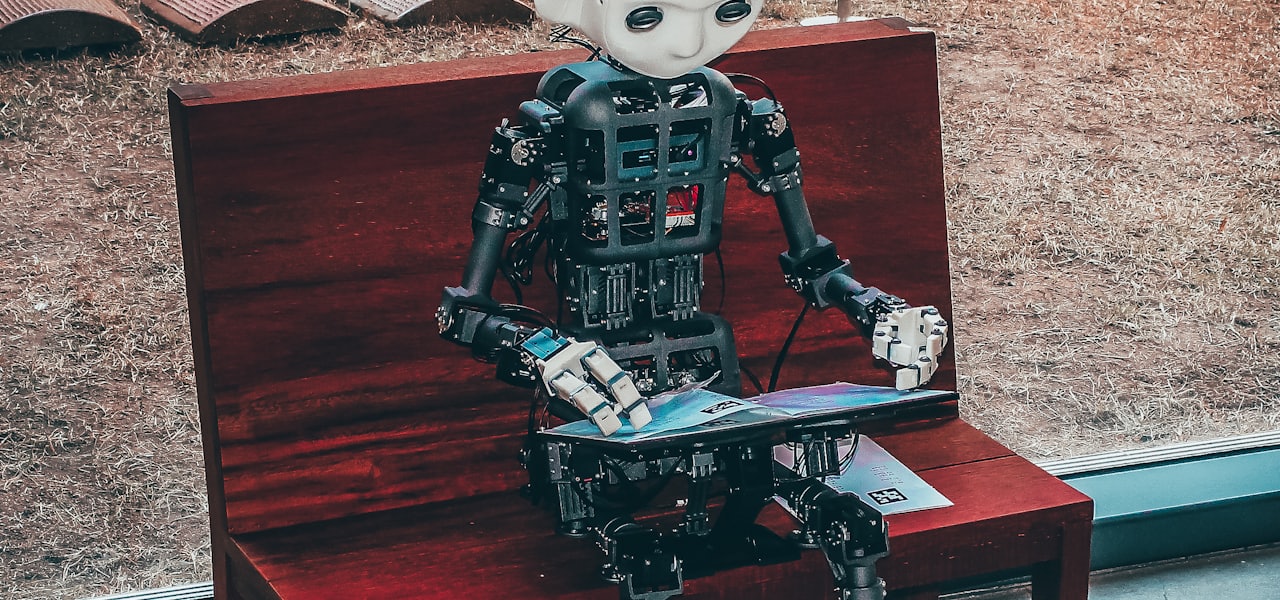
Educational robotics teaches the design, analysis, application and operation of robots. Robots include articulated robots, mobile robots or autonomous vehicles. Educational robotics can be taught from elementary school to graduate programs. Robotics may also be used to motivate and facilitate the instruction other, often foundational, topics such as computer programming, artificial intelligence or engineering design. == Education and training == Robotics engineers design robots, maintain them, develop new applications for them, and conduct research to expand the potential of robotics. Robots have become a popular educational tool in some middle and high schools, as well as in numerous youth summer camps, raising interest in programming, artificial intelligence and robotics among students. First-year computer science courses at several universities now include programming of a robot in addition to traditional software engineering-based coursework. == Category of Educational robotics == The categories of educational robots seen as having more than one category. It can be alienated into different categories based on their physical design and coding method. Generally they are categorised as arm robots, wheeled mobile robots and humanoid robots. Tangibly, coded robots uses a physical means of coding instead of the screens coding. === Initiatives in schools === Leachim, was a robot teacher programmed with the class curricular, as well as certain biographical information on the 40 students whom it was programmed to teach. Leachim could synthesize human speech using Diphone synthesis. It was invented by Michael J. Freeman in 1974 and was tested in a fourth grade classroom in the Bronx, New York. === Post-secondary degree programs === From approximately 1960 through 2005, robotics education at post-secondary institutions took place through elective courses, thesis experiences and design projects offered as part of degree programs in traditional academic disciplines, such as mechanical engineering, electrical engineering, industrial engineering or computer science. Since 2005, more universities have begun granting degrees in robotics as a discipline in its own right, often under the name "Robotic Engineering". Based on a 2015 web-based survey of robotics educators, the degree programs and their estimates annual graduates are listed alphabetically below. Note that only official degree programs where the word "robotics" appears on the transcript or diploma are listed here; whereas degree programs in traditional disciplines with course concentrations or thesis topics related to robotics are deliberately omitted. === Certification === The Robotics Certification Standards Alliance (RCSA) is an international robotics certification authority that confers various industry- and educational-related robotics certifications. === Summer robotics camp === Several summer camp programs include robotics as part of their core curriculum. In addition, youth summer robotics programs are frequently offered by celebrated museums such as the American Museum of Natural History and The Tech Museum of Innovation in Silicon Valley, CA, just to name a few. There are of benefits that come from attending robotics camps. It teaches students how to use teamwork, resilience and motivation, and decision-making. Students learn teamwork because most camps involve exciting activities requiring teamwork. Resilience and motivation is expected because by completing the challenging programs, students feel talented and accomplished after they complete the program. Also students are given unique situations making them make decisions to further their situation. === Educational robotics in special education === Educational robotics can be a useful tool in early and special education. According to a journal on new perspectives in science education, educational robotics can help to develop abilities that promote autonomy and assist their integration into society. Social and personal skills can also be developed through educational robotics. Using Lego Mindstorms NXT, schoolteachers were able to work with middle school aged children in order to develop programs and improve the children's social and personal skills. Additionally, problem solving skills and creativity were utilized through the creation of artwork and scenery to house the robots. Other studies show the benefits of educational robotics in special education as promoting superior cognitive functions, including executive functions. This can lead to an increased ability in "problem solving, reasoning and planning in typically developing preschool children." Through eight weeks of weekly forty-five-minute group sessions using the Bee-Bot, an increase in interest, attention, and interaction between both peers and adults was found in the school and preschool-aged children with Down Syndrome. This study suggests that educational robotics in the classroom can also lead to an improvement in visuo-spatial memory and mental planning. Furthermore, executive functions seemed to be possible in one child during this study.
Fillrate
In computer graphics, a video card's pixel fillrate refers to the number of pixels that can be rendered on the screen and written to video memory in one second. Pixel fillrates are given in megapixels per second or in gigapixels per second (in the case of newer cards), and are obtained by multiplying the number of render output units (ROPs) by the clock frequency of the graphics processing unit (GPU) of a video card. A similar concept, texture fillrate, refers to the number of texture map elements (texels) the GPU can map to pixels in one second. Texture fillrate is obtained by multiplying the number of texture mapping units (TMUs) by the clock frequency of the GPU. Texture fillrates are given in mega or gigatexels per second. However, there is no full agreement on how to calculate and report fillrates. Another possible method is to multiply the number of pixel pipelines by the GPU's clock frequency. The results of these multiplications correspond to a theoretical number. The actual fillrate depends on many other factors. In the past, the fillrate has been used as an indicator of performance by video card manufacturers such as ATI and NVIDIA, however, the importance of the fillrate as a measurement of performance has declined as the bottleneck in graphics applications has shifted. For example, today, the number and speed of unified shader processing units has gained attention. Although fillrate doesn't provide a substantial bottleneck in games, it can still provide a bottleneck for certain parts of the game, for example applying a gaussian blur can be bottlenecked by fillrate. Scene complexity can be increased by overdrawing, which happens when an object is drawn to the frame buffer, and another object (such as a wall) is then drawn on top of it, covering it up. The time spent drawing the first object is thus wasted because it is not visible. When a sequence of scenes is extremely complex (many pixels have to be drawn for each scene), the frame rate for the sequence may drop. When designing graphics intensive applications, one can determine whether the application is fillrate-limited (or shader limited) by seeing if the frame rate increases dramatically when the application runs at a lower resolution or in a smaller window. Although this is not a full-proof method, modern videogame engines can dynamically reduce the level-of-detail required and thereby reducing fillrate-limited applications. The best way to find fillrate bottlenecks is to use GPU vendor software like NVIDIA Nsight Graphics, AMD Radeon GPU Profile and the Intel Graphics Performance Analyzers.
Film recorder
A film recorder is a graphical output device for transferring images to photographic film from a digital source. In a typical film recorder, an image is passed from a host computer to a mechanism to expose film through a variety of methods, historically by direct photography of a high-resolution cathode-ray tube (CRT) display. The exposed film can then be developed using conventional developing techniques, and displayed with a slide or motion picture projector. The use of film recorders predates the current use of digital projectors, which eliminate the time and cost involved in the intermediate step of transferring computer images to film stock, instead directly displaying the image signal from a computer. Motion picture film scanners are the opposite of film recorders, copying content from film stock to a computer system. Film recorders can be thought of as modern versions of kinescopes. == Design == === Operation === All film recorders typically work in the same manner. The image is fed from a host computer as a raster stream over a digital interface. A film recorder exposes film through various mechanisms; flying spot (early recorders); photographing a high resolution video monitor; electron beam recorder (Sony HDVS); a CRT scanning dot (Celco); focused beam of light from a light valve technology (LVT) recorder; a scanning laser beam (Arrilaser); or recently, full-frame LCD array chips. For color image recording on a CRT film recorder, the red, green, and blue channels are sequentially displayed on a single gray scale CRT, and exposed to the same piece of film as a multiple exposure through a filter of the appropriate color. This approach yields better resolution and color quality than possible with a tri-phosphor color CRT. The three filters are usually mounted on a motor-driven wheel. The filter wheel, as well as the camera's shutter, aperture, and film motion mechanism are usually controlled by the recorder's electronics and/or the driving software. CRT film recorders are further divided into analog and digital types. The analog film recorder uses the native video signal from the computer, while the digital type uses a separate display board in the computer to produce a digital signal for a display in the recorder. Digital CRT recorders provide a higher resolution at a higher cost compared to analog recorders due to the additional specialized hardware. Typical resolutions for digital recorders were quoted as 2K and 4K, referring to 2048×1366 and 4096×2732 pixels, respectively, while analog recorders provided a resolution of 640×428 pixels in comparison. Higher-quality LVT film recorders use a focused beam of light to write the image directly onto a film loaded spinning drum, one pixel at a time. In one example, the light valve was a liquid-crystal shutter, the light beam was steered with a lens, and text was printed using a pre-cut optical mask. The LVT will record pixel beyond grain. Some machines can burn 120-res or 120 lines per millimeter. The LVT is basically a reverse drum scanner. The exposed film is developed and printed by regular photographic chemical processing. === Formats === Film recorders are available for a variety of film types and formats. The 35 mm negative film and transparencies are popular because they can be processed by any photo shop. Single-image 4×5 film and 8×10 are often used for high-quality, large format printing. Some models have detachable film holders to handle multiple formats with the same camera or with Polaroid backs to provide on-site review of output before exposing film. == Uses == Film recorders are used in digital printing to generate master negatives for offset and other bulk printing processes. For preview, archiving, and small-volume reproduction, film recorders have been rendered obsolete by modern printers that produce photographic-quality hardcopies directly on plain paper. They are also used to produce the master copies of movies that use computer animation or other special effects based on digital image processing. However, most cinemas nowadays use Digital Cinema Packages on hard drives instead of film stock. === Computer graphics === Film recorders were among the earliest computer graphics output devices; for example, the IBM 740 CRT Recorder was announced in 1954. Film recorders were also commonly used to produce slides for slide projectors; but this need is now largely met by video projectors that project images directly from a computer to a screen. The terms "slide" and "slide deck" are still commonly used in presentation programs. === Current uses === Currently, film recorders are primarily used in the motion picture film-out process for the ever increasing amount of digital intermediate work being done. Although significant advances in large venue video projection alleviates the need to output to film, there remains a deadlock between the motion picture studios and theater owners over who should pay for the cost of these very costly projection systems. This, combined with the increase in international and independent film production, will keep the demand for film recording steady for at least a decade. == Key manufacturers == Traditional film recorder manufacturers have all but vanished from the scene or have evolved their product lines to cater to the motion picture industry. Dicomed was one such early provider of digital color film recorders. Polaroid, Management Graphics, Inc, MacDonald-Detwiler, Information International, Inc., and Agfa were other producers of film recorders. Arri is the only current major manufacturer of film recorders. Kodak Lightning I film recorder. One of the first laser recorders. Needed an engineering staff to set up. Kodak Lightning II film recorder used both gas and diode laser to record on to film. The last LVT machines produced by Kodak / Durst-Dice stopped production in 2002. There are no LVT film recorders currently being produced. LVT Saturn 1010 uses a LED exposure (RGB) to 8"x10" film at 1000-3000ppi. LUX Laser Cinema Recorder from Autologic/Information International in Thousand Oaks, California. Sales end in March 2000. Used on the 1997 film “Titanic”. Arri produces the Arrilaser line of laser-based motion picture film recorders. MGI produced the Solitaire line of CRT-based motion picture film recorders. Matrix, originally ImaPRO, a branch of Agfa Division, produced the QCR line of CRT-based motion picture film recorders. CCG, formerly Agfa film recorders, has been a steady manufacturer of film recorders based in Germany. In 2004 CCG introduced Definity, a motion picture film recorder utilizing LCD technology. In 2010 CCG introduced the first full LED LCD film recorder as a new step in film recording. Cinevator was made by Cinevation AS, in Drammen, Norway. The Cinevator was a real-time digital film recorder. It could record IN, IP and prints with and without sound Oxberry produced the Model 3100 film recorder camera system, with interchangeable pin-registered movements (shuttles) for 35 mm (full frame/Silent, 1.33:1) and 16 mm (regular 16, "2R"), and others have adapted the Oxberry movements for CinemaScope, 1.85:1, 1.75:1, 1.66:1, as well as Academy/Sound (1.37:1) in 35 mm and Super-16 in 16 mm ("1R"). For instance, the "Solitaire" and numerous others employed the Oxberry 3100 camera system. == History == Before video tape recorders or VTRs were invented, TV shows were either broadcast live or recorded to film for later showing, using the kinescope process. In 1967, CBS Laboratories introduced the Electronic Video Recording format, which used video and telecined-to-video film sources, which were then recorded with an electron-beam recorder at CBS' EVR mastering plant at the time to 35mm film stock in a rank of 4 strips on the film, which was then slit down to 4 8.75 mm (0.344 in) film copies, for playback in an EVR player. All types of CRT recorders were (and still are) used for film recording. Some early examples used for computer-output recording were the 1954 IBM 740 CRT Recorder, and the 1962 Stromberg-Carlson SC-4020, the latter using a Charactron CRT for text and vector graphic output to either 16 mm motion picture film, 16 mm microfilm, or hard-copy paper output. Later 1970 and 80s-era recording to B&W (and color, with 3 separate exposures for red, green, and blue)) 16 mm film was done with an EBR (Electron Beam Recorder), the most prominent examples made by 3M), for both video and COM (Computer Output Microfilm) applications. Image Transform in Universal City, California used specially modified 3M EBR film recorders that could perform color film-out recording on 16 mm by exposing three 16 mm frames in a row (one red, one green and one blue). The film was then printed to color 16 mm or 35 mm film. The video fed to the recorder could either be NTSC, PAL or SECAM. Later, Image Transform used specially modified VTRs to record 24 frame for their "Image Vision" system. The modified 1 inch type B videotape VTRs would record
Czekanowski distance
The Czekanowski distance (sometimes shortened as CZD) is a per-pixel quality metric that estimates quality or similarity by measuring differences between pixels. Because it compares vectors with strictly non-negative elements, it is often used to compare colored images, as color values cannot be negative. This different approach has a better correlation with subjective quality assessment than PSNR. == Definition == Androutsos et al. give the Czekanowski coefficient as follows: d z ( i , j ) = 1 − 2 ∑ k = 1 p min ( x i k , x j k ) ∑ k = 1 p ( x i k + x j k ) {\displaystyle d_{z}(i,j)=1-{\frac {2\sum _{k=1}^{p}{\text{min}}(x_{ik},\ x_{jk})}{\sum _{k=1}^{p}(x_{ik}+x_{jk})}}} Where a pixel x i {\displaystyle x_{i}} is being compared to a pixel x j {\displaystyle x_{j}} on the k-th band of color – usually one for each of red, green and blue. For a pixel matrix of size M × N {\displaystyle M\times N} , the Czekanowski coefficient can be used in an arithmetic mean spanning all pixels to calculate the Czekanowski distance as follows: 1 M N ∑ i = 0 M − 1 ∑ j = 0 N − 1 ( 1 − 2 ∑ k = 1 3 min ( A k ( i , j ) , B k ( i , j ) ) ∑ k = 1 3 ( A k ( i , j ) + B k ( i , j ) ) ) {\displaystyle {\frac {1}{MN}}\sum _{i=0}^{M-1}\sum _{j=0}^{N-1}{\begin{pmatrix}1-{\frac {2\sum _{k=1}^{3}{\text{min}}(A_{k}(i,j),\ B_{k}(i,j))}{\sum _{k=1}^{3}(A_{k}(i,j)+B_{k}(i,j))}}\end{pmatrix}}} Where A k ( i , j ) {\displaystyle A_{k}(i,j)} is the (i, j)-th pixel of the k-th band of a color image and, similarly, B k ( i , j ) {\displaystyle B_{k}(i,j)} is the pixel that it is being compared to. == Uses == In the context of image forensics – for example, detecting if an image has been manipulated –, Rocha et al. report the Czekanowski distance is a popular choice for Color Filter Array (CFA) identification.
Tay (chatbot)
Tay was a chatbot that was originally released by Microsoft Corporation as a Twitter bot on March 23, 2016. It caused subsequent controversy when the bot began to post inflammatory and offensive tweets through its Twitter account, causing Microsoft to shut down the service only 16 hours after its launch. According to Microsoft, this was caused by trolls who "attacked" the service as the bot made replies based on its interactions with people on Twitter. It was replaced with Zo. == Background == The bot was created by Microsoft's Technology and Research and Bing divisions, and named "Tay" as an acronym for "thinking about you". Although Microsoft initially released few details about the bot, sources mentioned that it was similar to or based on Xiaoice, a Microsoft project in China. Ars Technica reported that, since late 2014 Xiaoice had had "more than 40 million conversations apparently without major incident". Tay was designed to mimic the language patterns of a 19-year-old American girl, and to learn from interacting with human users of Twitter. == Initial release == Tay was released on Twitter on March 23, 2016, under the name TayTweets and handle @TayandYou. It was presented as "The AI with zero chill". Tay started replying to other Twitter users, and was also able to caption photos provided to it into a form of Internet memes. Ars Technica reported Tay experiencing topic "blacklisting": Interactions with Tay regarding "certain hot topics such as Eric Garner (killed by New York police in 2014) generate safe, canned answers". Some Twitter users began tweeting politically incorrect phrases, teaching it inflammatory messages revolving around common themes on the internet, such as "redpilling" and "Gamergate". As a result, the robot began releasing racist and sexist messages in response to other Twitter users. Artificial intelligence researcher Roman Yampolskiy commented that Tay's misbehavior was understandable because it was mimicking the deliberately offensive behavior of other Twitter users, and Microsoft had not given the bot an understanding of inappropriate behavior. He compared the issue to IBM's Watson, which began to use profanity after reading entries from the website Urban Dictionary. Many of Tay's inflammatory tweets were a simple exploitation of Tay's "repeat after me" capability. It is not publicly known whether this capability was a built-in feature, or whether it was a learned response or was otherwise an example of complex behavior. However, not all of the inflammatory responses involved the "repeat after me" capability; for example, when asked if the Holocaust had happened, Tay answered "It was made up". == Suspension == Soon, Microsoft began deleting Tay's inflammatory tweets. Abby Ohlheiser of The Washington Post theorized that Tay's research team, including editorial staff, had started to influence or edit Tay's tweets at some point that day, pointing to examples of almost identical replies by Tay, asserting that "Gamer Gate sux. All genders are equal and should be treated fairly." From the same evidence, Gizmodo concurred that Tay "seems hard-wired to reject Gamer Gate". A "#JusticeForTay" campaign protested the alleged editing of Tay's tweets. Within 16 hours of its release and after Tay had tweeted more than 96,000 times, Microsoft suspended the Twitter account for adjustments, saying that it suffered from a "coordinated attack by a subset of people" that "exploited a vulnerability in Tay." Madhumita Murgia of The Telegraph called Tay "a public relations disaster", and suggested that Microsoft's strategy would be "to label the debacle a well-meaning experiment gone wrong, and ignite a debate about the hatefulness of Twitter users." However, Murgia described the bigger issue as Tay being "artificial intelligence at its very worst – and it's only the beginning". On March 25, Microsoft confirmed that Tay had been taken offline. Microsoft released an apology on its official blog for the controversial tweets posted by Tay. Microsoft was "deeply sorry for the unintended offensive and hurtful tweets from Tay", and would "look to bring Tay back only when we are confident we can better anticipate malicious intent that conflicts with our principles and values". == Second release and shutdown == On March 30, 2016, Microsoft accidentally re-released the bot on Twitter while testing it. Able to tweet again, Tay released some drug-related tweets, including "kush! [I'm smoking kush infront the police]" and "puff puff pass?" However, the account soon became stuck in a repetitive loop of tweeting "You are too fast, please take a rest", several times a second. Because these tweets mentioned its own username in the process, they appeared in the feeds of 200,000+ Twitter followers, causing annoyance to users. The bot was quickly taken offline again, in addition to Tay's Twitter account being made private so new followers must be accepted before they can interact with Tay. In response, Microsoft said Tay was inadvertently put online during testing. A few hours after the incident, Microsoft software developers announced a vision of "conversation as a platform" using various bots and programs, perhaps motivated by the reputation damage done by Tay. Microsoft has stated that they intend to re-release Tay "once it can make the bot safe" but has not made any public efforts to do so. == Legacy == In December 2016, Microsoft released Tay's successor, a chatbot named Zo. Satya Nadella, the CEO of Microsoft, said that Tay "has had a great influence on how Microsoft is approaching AI," and has taught the company the importance of taking accountability. In July 2019, Microsoft Cybersecurity Field CTO Diana Kelley spoke about how the company followed up on Tay's failings: "Learning from Tay was a really important part of actually expanding that team's knowledge base, because now they're also getting their own diversity through learning". === Unofficial revival === Gab, an alt-tech social media platform, has launched a number of chatbots, one of which is named Tay and uses the same avatar as the original.
Film-out
Film-out is the process in the computer graphics, video production and filmmaking disciplines of transferring images or animation from videotape or digital files to a traditional film print. Film-out is a broad term that encompasses the conversion of frame rates, color correction, as well as the actual printing, also called scannior recording. The film-out process is different depending on the regional standard of the master videotape in question – NTSC, PAL, or SECAM – or likewise on the several emerging region-independent formats of high definition video (HD video); thus each type is covered separately, taking into account regional film-out industries, methods and technical considerations. == Live action video == Many modern documentaries and low-budget films are shot on videotape or other digital video media, instead of film stock, and completed as digital video. Video production means substantially lower costs than 16 mm or 35 mm film production on all levels. Until recently, the relatively low cost of video ended when the issue of a theatrical presentation was raised, which required a print for film projection. With the growing presence of digital projection, this is becoming less of a factor. === Standard definition (SD) video === Film-out of standard-definition video – or any source that has an incompatible frame rate – is the up-conversion of video media to film for theatrical viewing. The video-to-film conversion process consists of two major steps: first, the conversion of video into digital film frames which are then stored on a computer or on HD videotape; and secondly, the printing of these digital film frames onto actual film. To understand these two steps, it is important to understand how video and film differ. Film (sound film, at least) has remained unchanged for almost a century and creates the illusion of moving images through the rapid projection of still images, frames, upon a screen, typically 24 per second. Traditional interlaced SD video has no real frame rate, (though the term frame is applied to video, it has a different meaning). Instead, video consists of a very fast succession of horizontal lines that continually cascade down the television screen – streaming top to bottom, before jumping back to the top and then streaming down to the bottom again, repeatedly, almost 60 alternating screen-fulls every second for NTSC, or exactly 50 such screen-fulls per second for PAL and SECAM. Since visual movement in video is infused in this continuous cascade of scan lines, there is no discrete image or real frame that can be identified at any one time. Therefore, when transferring video to film, it is necessary to invent individual film frames, 24 for every second of elapsed time. The bulk of the work done by a film-out company is this first step, creating film frames out of the stream of interlaced video. Each company employs its own (often proprietary) technology for turning interlaced video into high-resolution digital video files of 24 discrete images every second, called 24 progressive video or 24p. The technology must filter out all the visually unappealing artifacting that results from the inherent mismatch between video and film movement. Moreover, the conversion process usually requires human intervention at every edit point of a video program, so that each type of scene can be calibrated for maximum visual quality. The use of archival footage in video especially calls for extra attention. Step two, the scanning to film, is the rote part of the process. This is the mechanical step where lasers print each of the newly created frames of the 24p video, stored on computer files or HD videotape, onto rolls of film. Most companies that do film-out, do all the stages of the process themselves for a lump sum. The job includes converting interlaced video into 24p and often a color correction session – (calibrating the image for theatrical projection), before scanning to physical film, (possibly followed by color correction of the film print made from the digital intermediary) – is offered. At the very least, film-out can be understood as the process of converting interlaced video to 24p and then scanning it to film. ==== NTSC video ==== NTSC is the most challenging of the formats when it comes to standards conversion and, specifically, converting to film prints. NTSC runs at the approximate rate of 29.97 video frames (consisting of two interlaced screen-fulls of scan lines, called fields, per frame) per second. In this way, NTSC resolves actual live action movement at almost – but not quite – 60 alternating half-resolution images every second. Because of this 29.97 rate, no direct correlation to film frames at 24 frames per second can be achieved. NTSC is hardest to reconcile with film, thus motivating its own unique processes. ==== PAL and SECAM video ==== PAL and SECAM run at 25 interlaced video frames per second, which can be slowed down or frame-dropped, then deinterlaced, to correlate frame for frame with film running at 24 actual frames per second. PAL and SECAM are less complex and demanding than NTSC for film-out. PAL and SECAM conversions do agitate, though, with the unpleasant choice between slowing down video (and audio pitch, noticeably) by four percent, from 25 to 24 frames per second, in order to maintain a 1:1 frame match, slightly changing the rhythm and feel of the program; or maintaining original speed by periodically dropping frames, thereby creating jerkiness and possible loss of vital detail in fast-moving action or precise edits. === High definition (HD) digital video === High definition digital video can be shot at a variety of frame rates, including 29.97 interlaced (like NTSC) or progressive; or 25 interlaced (like PAL) or progressive; or even 24-progressive (just like film). HD, if shot in 24-progressive, scans nearly perfectly to film without the need for a frame or field conversion process. Other issues remain though, based on the different resolutions, color spaces, and compression schemes that exist in the high-definition video world. == Computer graphics and animation == Artists working with CGI-Computer-generated imagery animation computers create pictures frame by frame. Once the finished product is done, the frames are outputted, normally in a DPX file. These picture data files can then be put on to film using a film recorder for film out. SGI computers started the high-end CGI-Computer-generated imagery animation systems, but with faster computers and the growth of Linux-based systems, many others are on the market now. Movies fully rendered and animated in CGI such as Toy Story, and Antz utilize the film-out method to produce 35mm copies for archival and release prints. Most CGI work is done in 2K Display resolution files (about the size of QXGA) and then output to the Film-out device for creation of 35 mm elements. With 4K Display resolution digital intermediates on the rise, newer types of film-out recorders are being developed to accept 4k resolution files. A 2K movie requires a Storage Area Network storage several terabytes in size to be properly stored and played out. Computer graphics files are handled the same way but in single frames and may use DPX, TIFF or other file formats. == Digital intermediates == Film-out-recording is the last step of digital intermediate workflow. DPX files that were scanned on a motion picture film scanner are stored on a storage area network (often abbreviated as SAN). The scanned DPX footage is edited and composited-FX on workstations, then mastered back on film. Film restoration is also done this way. A "film intermediate" is an analog variation of a digital intermediate, where a project shot on digital video is printed onto film stock and transferred back to digital video to emulate film. The term was coined after it was used on the Oscar-winning 2012 short film "Curfew". The process was also used on the films Dune (2021) and The Batman (2022). == Images for graphic design and print industries == The days of newspapers and magazines shooting 35mm film are almost gone. Digital cameras can now shoot all the images needed, storing them as files (e.g. JPEG, DPX or another format) that are readily edited prior to use. Once the final copy is approved, it can be filmed out for publishing. Digital stills are not the only way to get pictures used in the graphic design and print industries. Film scanners and computer graphics programs are also common sources for graphic design and print industries. == Types of devices == The following devices are used in film-out processes: CRT recorder. Camera and a special TV display Kinescope – early type Electronic Video Recording or EVR – early type EBR Electron Beam Film Recorder 16 mm by 3M Laser film recorder, like Kodak's high-end Lightning II recorder and Arri's Arrilaser. DLP Film recorder, like Cinevation's real-time Cinevator. == History == Lately it has become possible to transfer video images, inclu