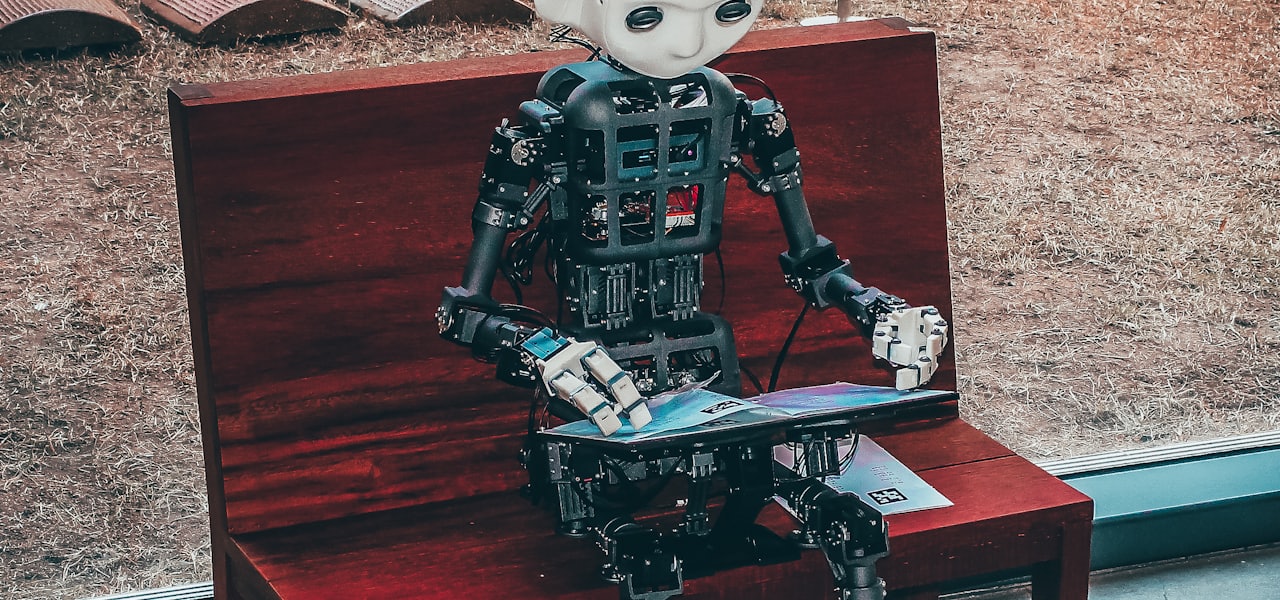
For popular psychology, the belief–desire–intention (BDI) model of human practical reasoning was developed by Michael Bratman as a way of explaining future-directed intention. BDI is fundamentally reliant on folk psychology (the 'theory theory'), which is the notion that our mental models of the world are theories. It was used as a basis for developing the belief–desire–intention software model. == Applications == BDI was part of the inspiration behind the BDI software architecture, which Bratman was also involved in developing. Here, the notion of intention was seen as a way of limiting time spent on deliberating about what to do, by eliminating choices inconsistent with current intentions. BDI has also aroused some interest in psychology. BDI formed the basis for a computational model of childlike reasoning CRIBB.
AstroPay
AstroPay is a global digital wallet that provides users with a way to pay, send, and receive money. The app provides online payments, virtual and physical debit cards, peer-to-peer money transfers, and more. == History == AstroPay was founded in Uruguay in 2009 as a payment processing company. Over time, it expanded its services across Latin America, EMEA, and APAC. A significant milestone occurred in 2016, when AstroPay spun off dLocal, focusing on cross-border payments for emerging markets. dLocal became Uruguay's first unicorn and eventually went public through a successful IPO. In 2020, AstroPay spun off its payment processing services into a new entity, D24, to focus on mobile wallet for cross border. Between 2023 and 2024 the Company brought new leadership to guide its transition towards becoming a fully focused global digital multicurrency wallet where users save, send, and spend globally. This shift introduced enhanced features, including loyalty prepaid cards and multicurrency accounts. == Services == AstroPay offers three main products: AstroPay Wallet, AstroPay check-out, and AstroPay Platform. AstroPay Wallet is a digital wallet for consumers, where they have multicurrency accounts, prepaid card and marketplace. With AstroPay check-out, businesses can tap into AstroPay's wallet user base by accepting AstroPay as a payment method in their check-out options. Lastly, AstroPay Platform enables other businesses to use the AstroPay network to launch their own global wallet. == Brand endorsements, partnerships == AstroPay's marketing strategy has included the development of co-branded products with sports teams and other brand. The company sponsored Burnley Football Club during the 2018–19 Premier League season, renewing the partnership for the 2021–22 Premier League season when it became the club's official payment service partner. In August 2021, AstroPay entered into a partnership with the Wolverhampton Wanderers for the 2021-22 Premier League season, and the following year, became the team's shirt sponsor. Later, in September 2021, AstroPay expanded its partnership with Wolverhampton Wanderers, which included becoming the team's official payment partner and later, in 2023, co-launching a co-branded card. Other partnerships include Newcastle United in 2021 in the English Premier League. AstroPay made arrangements to ensure that branding and logo would be visible on the pitch-side LED advertising during Premier League matches. Furthermore, in June 2022, the company renewed it's partnership with Wolverhampton Wanderers for the 2022-23 Premier League season and launched its Wolves debit card in February 2023. Some other notable partnerships include: Universidad de Chile in 2024, Tottenham Hotspurs in 2023-25, and even a collaboration with Lionel Messi across all of Latin America. == Recent developments == AstroPay has refocused its strategy since 2023, pivoting from payment processing to concentrate on its global digital wallet. This move reflects a broader effort to redefine the company's market positioning by emphasizing global user-friendly financial services, while separating its identity from previous operations managed by dLocal and D24.
Cooliris (plugin)
Cooliris (for Desktop), formerly known as PicLens, was a web browser extension developed by Cooliris, Inc, and later acquired by Yahoo. The plugin provides an interactive 3D-like experience for viewing digital images and videos from the web and from desktop applications. The software places a small icon atop image thumbnails that appear on a webpage. Clicking on the icon loads the Cooliris 3D Wall, a browsing environment that gives the user the effect of flying through a three-dimensional space. Released to the public in January 2008, The New York Times described Cooliris as the "new immersive approach to Web navigation". Cooliris went out to win the 2008 Crunchies Award for Best Design. The plugin has received over 50 million downloads. As of May 2014 browser plugins are unavailable from the official website. There are only links to tablet apps - for iOS and Android.
Minimum resolvable contrast
Minimum resolvable contrast (MRC) is a subjective measure of a visible spectrum sensor’s or camera's sensitivity and ability to resolve data. A snapshot image of a series of three bar targets of selected spatial frequencies and various contrast coatings captured by the unit under test (UUT) is used to determine the MRC of the UUT, i.e., the visible spectrum camera or sensor. A trained observer selects the smallest target resolvable at each contrast level. Typically, specialized computer software collects the inputted data of the observer and provides a graph of contrast vs. spatial frequency at a given luminance level. A first order polynomial is fitted to the data and an MRC curve of spatial frequency versus contrast is generated.
Mathematical morphology
Mathematical morphology (MM) is a theory and technique for analyzing and processing geometrical structures. It's based on set theory, lattice theory, topology, and random functions. MM is most commonly applied to digital images, but it can be employed as well on graphs, surface meshes, solids, and many other spatial structures. Topological and geometrical continuous-space concepts such as size, shape, convexity, connectivity, and geodesic distance, were introduced by MM on both continuous and discrete spaces. MM is also the foundation of morphological image processing, which consists of a set of operators that transform images according to the above characterizations. The basic morphological operators are erosion, dilation, opening and closing. MM was originally developed for binary images, and was later extended to grayscale functions and images. The subsequent generalization to complete lattices is widely accepted today as MM's theoretical foundation. == History == Mathematical Morphology was developed in 1964 by the collaborative work of Georges Matheron and Jean Serra, at the École des Mines de Paris, France. Matheron supervised the PhD thesis of Serra, devoted to the quantification of mineral characteristics from thin cross sections, and this work resulted in a novel practical approach, as well as theoretical advancements in integral geometry and topology. In 1968, the Centre de Morphologie Mathématique was founded by the École des Mines de Paris in Fontainebleau, France, led by Matheron and Serra. During the rest of the 1960s and most of the 1970s, MM dealt essentially with binary images, treated as sets, and generated a large number of binary operators and techniques: Hit-or-miss transform, dilation, erosion, opening, closing, granulometry, thinning, skeletonization, ultimate erosion, conditional bisector, and others. A random approach was also developed, based on novel image models. Most of the work in that period was developed in Fontainebleau. From the mid-1970s to mid-1980s, MM was generalized to grayscale functions and images as well. Besides extending the main concepts (such as dilation, erosion, etc.) to functions, this generalization yielded new operators, such as morphological gradients, top-hat transform and the Watershed (MM's main segmentation approach). In the 1980s and 1990s, MM gained a wider recognition, as research centers in several countries began to adopt and investigate the method. MM started to be applied to a large number of imaging problems and applications, especially in the field of non-linear filtering of noisy images. In 1986, Serra further generalized MM, this time to a theoretical framework based on complete lattices. This generalization brought flexibility to the theory, enabling its application to a much larger number of structures, including color images, video, graphs, meshes, etc. At the same time, Matheron and Serra also formulated a theory for morphological filtering, based on the new lattice framework. The 1990s and 2000s also saw further theoretical advancements, including the concepts of connections and levelings. In 1993, the first International Symposium on Mathematical Morphology (ISMM) took place in Barcelona, Spain. Since then, ISMMs are organized every 2–3 years: Fontainebleau, France (1994); Atlanta, USA (1996); Amsterdam, Netherlands (1998); Palo Alto, CA, USA (2000); Sydney, Australia (2002); Paris, France (2005); Rio de Janeiro, Brazil (2007); Groningen, Netherlands (2009); Intra (Verbania), Italy (2011); Uppsala, Sweden (2013); Reykjavík, Iceland (2015); Fontainebleau, France (2017); and Saarbrücken, Germany (2019). =
Microsoft Fresh Paint
Fresh Paint is a painting app developed by Microsoft and released on May 25, 2012. == History == Fresh Paint originated from a Microsoft Research project known as Project Gustav, an endeavor to reproduce the behavior of physical oil paint on a digital medium. To push the boundaries of simulating oil on a digital medium, the research team created a physics model that precisely replicated on a screen what would happen in the real world if you combined oil, a surface and a tool such as a paint brush. Two publications, Detail-Preserving Paint Modeling for 3D Brushes and Simple Data-Driven Modeling of Brushes, were released as a result of the team’s findings. After a variety of internal testing Project, Gustav was codenamed Digital Art. Partnering with The Museum of Modern Art, Digital Art was tested for a year by 60,000 people. With feedback culled from MoMA, developers expanded the existing physics model, experimenting with how real oil paint blended and reacted to the texture of a canvas. After final adjustments were made, Digital Art was rebranded as Fresh Paint. It was released to the public on 25 May 2012.
Colors!
Colors! is a series of digital painting applications for handheld game consoles and mobile devices. Originally created as a homebrew application for Nintendo DS (as Colors!), which was since legitimately distributed on PlayStation Vita, iOS, and Android, the project eventually evolved into an officially licensed application for Nintendo 3DS (as Colors! 3D) and Nintendo Switch (as Colors Live). == History == === Colors! === Colors! was originally released in June 2007 as a simple homebrew painting application for the Nintendo DS. It was developed by Jens Andersson, a programmer and designer on sabbatical from the games industry who wanted to experiment with the potential of the new handheld platform. Shortly after, Rafał Piasek created an online gallery where users could upload paintings made with the program. Colors! quickly became one of the best-known homebrew applications on the Nintendo DS, and in September 2008, it was also released for the iPhone and iPod Touch. As of August 2010, it had been downloaded almost half a million times. It was voted the most popular homebrew application on the Nintendo DS by readers of the R4 for DS blog. Development of Colors! DS homebrew officially ended in December 2010 although the official gallery still accepted submissions from DS users until 2020 when Colors! Gallery was discontinued. === Colors! 3D === Colors! 3D is a successor to the application Colors! for the Nintendo 3DS. It was released as an officially licensed application for the Nintendo eShop in North America on April 5, 2012, and in the PAL region on April 19, 2012. It was later released in Japan on August 21, 2013, published by Arc System Works. Colors! 3D allows users to draw on five layers, each on their own stereoscopic 3D plane. Drawing is done on the bottom screen, while the top screen displays the painting in 3D. While drawing, players can use the various controls on the Nintendo 3DS to change layers, zoom and pan, and alter the pressure of their brush. Pressing the L button allows users to access a menu to change brush type, size, and opacity, modify the layers, use the camera to provide references, and more. When the user finishes their painting, they can export it to the SD card for viewing in the Nintendo 3DS Camera application. Users can also upload their finished creations to an online gallery, viewed on the 3DS or the official website. Gallery features include hashtags and the ability to follow artists and post comments. Each painting also features a replay feature that allows viewers to see how it was drawn. The application also features local multiplayer, allowing several people to work cooperatively on a painting. In April 2024, the developers of Colors! 3D collaborated with the Pretendo Network project to officially add support for the application, meaning Colors! 3D will continue to operate as normal when using Pretendo Network. ==== Reception ==== IGN gave the application a score of 9.0 and an Editor's Choice award, praising its simple interface and tutorials. Destructoid gave the app a 9.0, calling it "a simple and incredibly fun tool with an amazing community of artists proudly displaying their beautiful and funny 3D images." Nintendo Life gave the app a 9/10, stating, "Though lacking in any structured play, Colors! 3D’s robust free drawing system and unique ability to let anyone create their own three-dimensional artwork more than make up for this." === Colors Live === A Nintendo Switch successor called Colors Live (stylised as Colors L!ve) was released in 2020 after being funded via a Kickstarter campaign. This expanded upon the features of previous installments by adding new brushes, increasing the maximum number of layers to ten, and introducing blend modes. A new game mode called Colors Quest was also included. A pressure-sensitive pen called the Colors SonarPen was developed in collaboration with GreenBulb to facilitate drawing on the Nintendo Switch, and comes pre-bundled with physical copies of the game. ==== Colors Quest ==== This new mode acts as a story-driven adventure wherein players are given a daily drawing challenge with a specific theme and certain stipulations that must be fulfilled. Once the drawing is complete, players must anonymously score other players' submissions, these scores are then aggregated to produce a personal ranking that measures the improvement in the player's art skills over time.