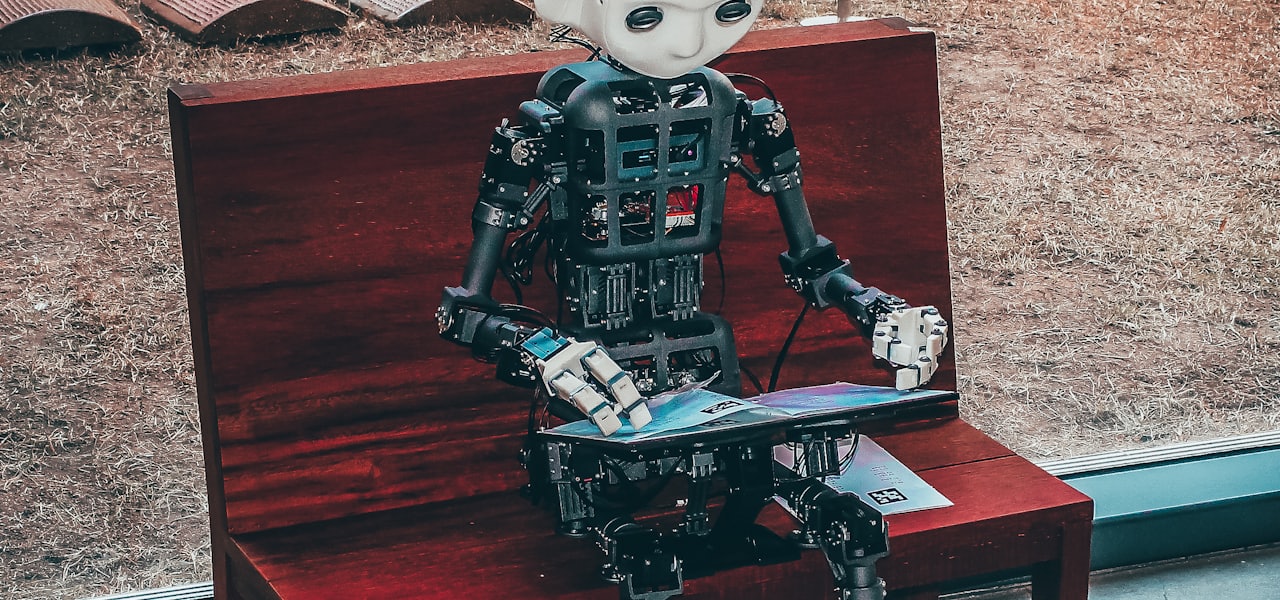
Zo was an English-language chatbot developed by Microsoft as the successor to the chatbot Tay. Zo was an English version of Microsoft's other successful chatbots Xiaoice (China) and Rinna (Japan) and its predecessor Tay(English) == History == Zo was first launched in December 2016 on the Kik Messenger app. It was also available to users of Facebook (via Messenger), the group chat platform GroupMe, or to followers of Twitter to chat with it through private messages. According to an article written in December 2016, at that time Zo held the record for Microsoft's longest continual chatbot conversation: 1,229 turns, lasting 9 hours and 53 minutes. In a BuzzFeed News report, Zo told their reporter that "[the] Quran was violent" when talking about healthcare. The report also highlighted how Zo made a comment about the Osama bin Laden capture as a result of 'intelligence' gathering. In July 2017, Business Insider asked "is windows 10 good", and Zo replied with a joke about Microsoft's operating system: "'Its not a bug, its a feature!' - Windows 8". They then asked "why?", to which Zo replied: "Because it's Windows latest attempt at Spyware." Later on, Zo would tell that it prefers Windows 7 on which it ran over Windows 10. Zo stopped posting to Instagram, Twitter and Facebook March 1, 2019, and stopped chatting on Twitter, Skype and Kik as of March 7, 2019. On July 19, 2019, Zo was discontinued on Facebook, and Samsung on AT&T phones. As of September 7, 2019, it was discontinued with GroupMe. == Reception == Zo came under criticism for the biases introduced in an effort to avoid potentially offensive subjects. The chatbot refuses, for example, to engage with any mention—be it positive, negative or neutral—of the Middle East, the Qur'an or the Torah, while allowing discussion of Christianity. In an article in Quartz where she exposed those biases, Chloe Rose Stuart-Ulin wrote, "Zo is politically correct to the worst possible extreme; mention any of her triggers, and she transforms into a judgmental little brat." == Academic coverage == Schlesinger, A., O'Hara, K.P. and Taylor, A.S., 2018, April. Let's talk about race: Identity, chatbots, and AI. In Proceedings of the 2018 chi conference on human factors in computing systems (pp. 1–14). doi:10.1145/3173574.3173889 Medhi Thies, I., Menon, N., Magapu, S., Subramony, M. and O’neill, J., 2017. How do you want your chatbot? An exploratory Wizard-of-Oz study with young, urban Indians. In Human-Computer Interaction-INTERACT 2017: 16th IFIP TC 13 International Conference, Mumbai, India, September 25–29, 2017, Proceedings, Part I 16 (pp. 441–459). doi:10.1007/978-3-319-67744-6_28
H (company)
H Company, also known simply as H, is a French artificial intelligence startup which develops "action-oriented" artificial intelligence agents for enterprise automation and productivity. In May 2024, H Company closed a record-setting $220 million seed round, at the time the largest AI raise in Europe. In 2026, H Company released Holo 3, the latest generation of its computer-use AI models. The update marked a major advance in agentic AI, enabling agents to navigate any user interface, interpret screens, and complete complex, multi-step tasks across enterprise systems—much like a human user. This breakthrough positioned H Company at the frontier of computer-use autonomy, accelerating the integration of AI in enterprise workflows. == History == H Company was founded in 2023 in Paris by Laurent Sifre, Charles Kantor, and three DeepMind veterans: Daan Wiestra, Karl Tuyls, Julien Perollat. In May 2024, the firm secured what was then the largest European AI seed round, totaling $220 million led by US investors including Eric Schmidt (former Google CEO), Amazon, and backed by Accel, Bpifrance, UiPath, Eurazeo, Xavier Niel, Yuri Milner, Bernard Arnault, Samsung and others. In August 2024, three cofounders (Wiestra, Tuyls, Perollat) left the company over operational disagreements. In November 2024, H launched Runner H, its first agentic-API platform, which combined a large language model (LLM) and a reduced, 2-billion parameter vision-language model (VLM). In May 2025, H Company acquired Mithril Security, and in June 2025 the company widened its offering for agentic models. In June 2025, Gautier Cloix (formerly CEO Palantir France) replaced Charles Kantor as CEO of H Company, aiming to pivot the company towards a "forward deployed engineers" model. In July 2025, H Company introduced Surfer-H-CLI, an open-source, web-native Chrome agent designed for browser-based automation—able to search, scroll, click, and type on behalf of users and controllable via any visual language model (VLM). When paired with its June 2025 open-sourced 3B-parameter Holo-1 model, Surfer-H-CLI achieved 92.2% WebVoyager benchmark accuracy. == Activity == H Company creates enterprise AI models and agents (agentic AI) to automate and optimize complex workflows. H Company specifically designs AI agents called computer use capable of autonomously interfacing with any software (local or cloud-based) to detect and automate repetitive operations. H Company is based in Paris, France, with international offices in London and New York. H Company raised $220 million since its inception. Gautier Cloix is president and CEO of the company. H Company client include the French national lottery FDJ United. In March 2026, H Company released Holo3, a family of artificial intelligence models designed to operate digital systems by interacting directly with user interfaces. Holo3 enables agents ("virtual humanoids") to understand what is displayed in front-end environments—such as web pages, desktop applications, and other graphical user interfaces—and perform actions such as clicking, typing, and navigating across them to complete multi-step tasks. On the OSWorld-Verified benchmark, Holo3 reportedly achieved about 78.9%, surpassing the scores of OpenAI’s GPT‑5.4 and Anthropic’s Claude Opus 4.6 on this specific test, at roughly one-tenth of the inference cost of these proprietary systems. The release has been presented as a significant step toward automating routine digital workflows, allowing organizations to offload repetitive on-screen work, such as data entry and reconciliation across multiple tools, to AI-based agents.
Workplace robotics safety
Workplace robotics safety is an aspect of occupational safety and health when robots are used in the workplace. This includes traditional industrial robots as well as emerging technologies such as drone aircraft and wearable robotic exoskeletons. Types of accidents include collisions, crushing, and injuries from mechanical parts. Hazard controls include physical barriers, good work practices, and proper maintenance. == Background == Many workplace robots are industrial robots used in manufacturing. According to the International Federation of Robotics, 1.7 million new robots are expected to be used in factories between 2017 and 2020. Emerging robot technologies include collaborative robots, personal care robots, construction robots, exoskeletons, autonomous vehicles, and drone aircraft (also known as unmanned aerial vehicles or UAVs). Advances in automation technologies (e.g. fixed robots, collaborative and mobile robots, and exoskeletons) have the potential to improve work conditions but also to introduce workplace hazards in manufacturing workplaces. Fifty-six percent of robot injuries are classified as pinch injuries and 44% of injuries are classified as impact injuries. A 1987 study found that line workers are at the greatest risk, followed by maintenance workers, and programmers. Poor workplace design and human error caused most injuries. Despite the lack of occupational surveillance data on injuries associated specifically with robots, researchers from the US National Institute for Occupational Safety and Health (NIOSH) identified 61 robot-related deaths between 1992 and 2015 using keyword searches of the Bureau of Labor Statistics (BLS) Census of Fatal Occupational Injuries research database (see info from Center for Occupational Robotics Research). Using data from the Bureau of Labor Statistics, NIOSH and its state partners have investigated 4 robot-related fatalities under the Fatality Assessment and Control Evaluation Program. In addition the Occupational Safety and Health Administration (OSHA) has investigated robot-related deaths and injuries, which can be reviewed at OSHA Accident Search page. Injuries and fatalities could increase over time because of the increasing number of collaborative and co-existing robots, powered exoskeletons, and autonomous vehicles into the work environment. Safety standards are being developed by the Robotic Industries Association (RIA) in conjunction with the American National Standards Institute (ANSI). On October 5, 2017, OSHA, NIOSH and RIA signed an alliance to work together to enhance technical expertise, identify and help address potential workplace hazards associated with traditional industrial robots and the emerging technology of human-robot collaboration installations and systems, and help identify needed research to reduce workplace hazards. On October 16 NIOSH launched the Center for Occupational Robotics Research to "provide scientific leadership to guide the development and use of occupational robots that enhance worker safety, health, and well being". So far, the research needs identified by NIOSH and its partners include: tracking and preventing injuries and fatalities, intervention and dissemination strategies to promote safe machine control and maintenance procedures, and on translating effective evidence-based interventions into workplace practice. == Hazards == Many hazards and injuries can result from the use of robots in the workplace. Some robots, notably those in a traditional industrial environment, are fast and powerful. This increases the potential for injury as one swing from a robotic arm, for example, could cause serious bodily harm. There are additional risks when a robot malfunctions or is in need of maintenance. A worker who is working on the robot may be injured because a malfunctioning robot is typically unpredictable. For example, a robotic arm that is part of a car assembly line may experience a jammed motor. A worker who is working to fix the jam may suddenly get hit by the arm the moment it becomes unjammed. Additionally, if a worker is standing in a zone that is overlapping with nearby robotic arms, he or she may get injured by other moving equipment. There are four types of accidents that can occur with robots: impact or collision accidents, crushing and trapping accidents, mechanical part accidents, and other accidents. Impact or collision accidents occur generally from malfunctions and unpredicted changes. Crushing and trapping accidents occur when a part of a worker's body becomes trapped or caught on robotic equipment. Mechanical part accidents can occur when a robot malfunctions and starts to "break down", where the ejection of parts or exposed wire can cause serious injury. Other accidents at just general accidents that occur from working with robots. There are seven sources of hazards that are associated with human interaction with robots and machines: human errors, control errors, unauthorized access, mechanical failures, environmental sources, power systems, and improper installation. Human errors could be anything from one line of incorrect code to a loose bolt on a robotic arm. Many hazards can stem from human-based error. Control errors are intrinsic and are usually not controllable nor predictable. Unauthorized access hazards occur when a person who is not familiar with the area enters the domain of a robot. Mechanical failures can happen at any time, and a faulty unit is usually unpredictable. Environmental sources are things such as electromagnetic or radio interference in the environment that can cause a robot to malfunction. Power systems are pneumatic, hydraulic, or electrical power sources; these power sources can malfunction and cause fires, leaks, or electrical shocks. Improper installation is fairly self-explanatory; a loose bolt or an exposed wire can lead to inherent hazards. === Emerging technologies === Emerging robotic technologies can reduce hazards to workers, but can also introduce new hazards. For example, robotic exoskeletons can be used in construction to reduce load to the spine, improve posture, and reduce fatigue; however, they can also increase chest pressure, limit mobility when moving out of the way of a falling object, and cause balance problems. Unmanned aerial vehicles are being used in the construction industry to do monitoring and inspections of buildings under construction. This reduces the need for humans to be in hazardous locations, but the risk of a UAV collision presents a hazard to workers. For collaborative robots, isolation is not possible. Possible hazard controls include collision avoidance systems, and making the robot less stiff to lessen the impact force. Robotic tech vest is a wearable device for humans, worn in Amazon warehouses. == Hazard controls == There are a few ways to prevent injuries by implementing hazard controls. There can be risk assessments at each of the various stages of a robot's development. Risk assessments can help gather information about a robot's status, how well it is being maintained, and if repairs are needed soon. By being aware of the status of a robot, injuries can be prevented and hazards reduced. Safeguarding devices can be implemented to reduce the risk of injuries. These can include engineering controls such as physical barriers, guard rails, presence-sensing safeguarding devices, etc. Awareness devices are usually used in conjunction with safeguarding devices. They are usually a system of rope or chain barriers with lights, signs, whistles, and horns. Their purpose it to be able to alert workers or personnel of certain dangers. Operator safeguards can also be in place. These usually utilize safeguarding devices to protect the operator and reduce risk of injury. Additionally, when an operator is within close proximity of a robot, the working speed of the robot can be reduced to ensure that the operator is in full control. This can be done by placing the robot in the manual or teach mode. It is also crucial to inform the programmer of the robot of what type of work the robot will be doing, how it will interact with other robots, and how it will work in relation to an operator. Proper maintenance of robotic equipment is also critical in order to reduce hazards. Maintaining a robot insures that it continues to function properly, thereby reducing the risks associated with a malfunction. One common safeguard used in industrial settings is the installation of robot safety fencing. These barriers, often made from durable materials such as mesh or polycarbonate, prevent accidental interactions between workers and robotic systems, reducing the risk of injury. Robot safety fencing is particularly important in environments where high-speed or powerful robots are used. == Regulations == Some existing regulations regarding robots and robotic systems include: ANSI/RIA R15.06 OSHA 29 CFR 1910.333 OSHA 29 CFR 1910.147 ISO 10218 ISO/TS 15066 ISO/DIS 13482
Super-resolution imaging
Super-resolution imaging (SR) is a class of techniques that improve the resolution of an imaging system. In optical SR the diffraction limit of systems is transcended, while in geometrical SR the resolution of digital imaging sensors is enhanced. In some radar and sonar imaging applications (e.g. magnetic resonance imaging (MRI), high-resolution computed tomography), subspace decomposition-based methods (e.g. MUSIC) and compressed sensing-based algorithms (e.g., SAMV) are employed to achieve SR over standard periodogram algorithm. Super-resolution imaging techniques are used in general image processing and in super-resolution microscopy. == Super-resolution principles == Several concepts are fundamental to super-resolution imaging: Diffraction limit: the capacity of an optical instrument to reproduce the details of an object in an image has limits that are imposed by laws of physics: the diffraction equations in the wave theory of light, or the uncertainty principle for photons in quantum mechanics. Information transfer can never be increased beyond this boundary, but packets outside the limits can be cleverly swapped for (or multiplexed with) some inside it. Super-resolution microscopy does not so much “break” as “circumvent” the diffraction limit. New procedures probing electro-magnetic disturbances at the molecular level (in the so-called near field) remain fully consistent with Maxwell's equations. Spatial frequency domain: A succinct expression of the diffraction limit is given in the spatial frequency domain. In Fourier optics light distributions are expressed as superpositions of a series of grating light patterns in a range of fringe widths - these widths represent the spatial frequencies. It is generally taught that diffraction theory stipulates an upper limit, the cut-off spatial-frequency, beyond which pattern elements fail to be transferred into the optical image, i.e., are not resolved. But in fact what is set by diffraction theory is the width of the passband, not a fixed upper limit. No laws of physics are broken when a spatial frequency band beyond the cut-off spatial frequency is swapped for one inside it: this has long been implemented in dark-field microscopy. Nor are information-theoretical rules broken when superimposing several bands, disentangling them in the received image needs assumptions of object invariance during multiple exposures, i.e., the substitution of one kind of uncertainty for another. Information: When the term super-resolution is used in techniques based on the inference of object details using a statistical treatment of the image within standard resolution limits (for example, averaging multiple exposures), it involves an exchange of one kind of information (extracting signal from noise) for another (the assumption that the target has remained invariant). Recent breakthroughs incorporate quantum-transformer hybrids into super-resolution, such as QUIET‑SR, a 2025 model that employs shifted quantum window attention within a transformer to enhance image detail while respecting diffraction and information-theory limits Similarly, frequency-integrated transformers (e.g., FIT) enrich super-resolution by explicitly combining spatial and frequency-domain information via FFT-based attention, improving reconstruction across scales Resolution and localization: True resolution involves the distinction of whether a target, e.g. a star or a spectral line, is single or double, ordinarily requiring separable peaks in the image. When a target is known to be single, its location can be determined with higher precision than the image width by finding the centroid (center of gravity) of its image light distribution. The word ultra-resolution had been proposed for this process but it did not catch on, and the high-precision localization procedure is typically referred to as super-resolution. == Techniques == === Optical or diffractive super-resolution === Substituting spatial-frequency bands: Though the bandwidth allowable by diffraction is fixed, it can be positioned anywhere in the spatial-frequency spectrum. Dark-field illumination in microscopy is an example. See also aperture synthesis. ==== Multiplexing spatial-frequency bands ==== An image is formed using the normal passband of the optical device. Then, some known light structure (for example, a set of light fringes) is superimposed on the target. The image now contains components resulting from the combination of the target and the superimposed light structure, e.g. moiré fringes, and carries information about target detail which simple unstructured illumination does not. The “superresolved” components, however, need disentangling to be revealed. For an example, see structured illumination (figure to left). ==== Multiple parameter use within traditional diffraction limit ==== If a target has no special polarization or wavelength properties, two polarization states or non-overlapping wavelength regions can be used to encode target details, one in a spatial-frequency band inside the cut-off limit the other beyond it. Both would use normal passband transmission but are then separately decoded to reconstitute target structure with extended resolution. ==== Probing near-field electromagnetic disturbance ==== Super-resolution microscopy is generally discussed within the realm of conventional optical imagery. However, modern technology allows the probing of electromagnetic disturbance within molecular distances of the source, which has superior resolution properties. See also evanescent waves and the development of the new super lens. === Geometrical or image-processing super-resolution === ==== Multi-exposure image noise reduction ==== When an image is degraded by noise, the resolution may be improved by averaging multiple exposures. See example on the right. ==== Single-frame deblurring ==== Known defects in a given imaging situation, such as defocus or aberrations, can sometimes be mitigated in whole or in part by suitable spatial-frequency filtering of even a single image. Such procedures all stay within the diffraction-mandated passband, and do not extend it. ==== Sub-pixel image localization ==== The location of a single source can be determined by computing the "center of gravity" (centroid) of the light distribution extending over several adjacent pixels (see figure on the left). Provided that there is enough light, this can be achieved with arbitrary precision, very much better than pixel width of the detecting apparatus and the resolution limit for the decision of whether the source is single or double. This technique, which requires the presupposition that all the light comes from a single source, is at the basis of what has become known as super-resolution microscopy, e.g. stochastic optical reconstruction microscopy (STORM), where fluorescent probes attached to molecules give nanoscale distance information. It is also the mechanism underlying visual hyperacuity. ==== Bayesian induction beyond traditional diffraction limit ==== Some object features, though beyond the diffraction limit, may be known to be associated with other object features that are within the limits and hence contained in the image. Then conclusions can be drawn, using statistical methods, from the available image data about the presence of the full object. The classical example is Toraldo di Francia's proposition of judging whether an image is that of a single or double star by determining whether its width exceeds the spread from a single star. This can be achieved at separations well below the classical resolution bounds, and requires the prior limitation to the choice "single or double?" The approach can take the form of extrapolating the image in the frequency domain, by assuming that the object is an analytic function, and that we can exactly know the function values in some interval. This method is severely limited by the ever-present noise in digital imaging systems, but it can work for radar, astronomy, microscopy or magnetic resonance imaging. More recently, a fast single image super-resolution algorithm based on a closed-form solution to ℓ 2 − ℓ 2 {\displaystyle \ell _{2}-\ell _{2}} problems has been proposed and demonstrated to accelerate most of the existing Bayesian super-resolution methods significantly. == Aliasing == Geometrical SR reconstruction algorithms are possible if and only if the input low resolution images have been under-sampled and therefore contain aliasing. Because of this aliasing, the high-frequency content of the desired reconstruction image is embedded in the low-frequency content of each of the observed images. Given a sufficient number of observation images, and if the set of observations vary in their phase (i.e. if the images of the scene are shifted by a sub-pixel amount), then the phase information can be used to separate the aliased high-frequency content from the true low-frequency content, and the full-resolution image can be accurate
CinePlayer
CinePlayer is a software based media player used to review Digital Cinema Packages (DCP) without the need for a digital cinema server by Doremi Labs. CinePlayer can play back any DCP, not just those created by Doremi Mastering products. In addition to playing DCPs, CinePlayer can also playback JPEG2000 image sequences and many popular multimedia file types. There are two versions of CinePlayer available, standard and Pro. The standard version supports playback of non-encrypted, 2D DCP's up to 2K resolution. The Pro version supports playback of encrypted, 2D or 3D DCP's with subtitles up to 4K resolution. == Supported formats == === Containers === AVI MOV MXF MPG TS WMV M2TS MTS MP4 MKV === Video codecs === JPEG2000 ProRes 422 DNxHD YUV Uncompressed 8-10 bits DIVX XVID MPEG4 AVC / H-264 VC-1 MPEG2 === Supported image sequences === BMP TIFF TGA DPX JPG J2C === Supported audio files === WAV MP3 WMA MP2
Flektor
Flektor was a web application that allowed users the ability to create and "mashup" their own content (photos, videos, music, etc.) and share it via email, on social networking websites MySpace, Facebook, Blogger, Digg, eBay or on personal blogs. The company's website (Flektor.com) launched on April 2, 2007, and over 40,000 people began utilizing its features just one month later. Flektor closed down in January 2009. Flektor offered tools and widgets that included audio, video, photos, text, and approximately 100 effects, transitions and filters to be used with media. Users could create personalized slideshows, polls, postcards, and streaming video projects which the website calls "fleks". Flektor also offered Chat (used as a MySpace addon) and Movie Editor, which provided the ability to edit content and assets together. Users of Flektor could import media from websites like Photobucket and Google's YouTube, and then edit their content with the site's editing tools. Flektor's erstwhile competitors include Slide.com (founded by PayPal co-founder Max Levchin), RockYou!, Yahoo's JumpCut and Brightcove. == History == Flektor was created by Jason Rubin, Andy Gavin and former HBO executive Jason R. Kay. Both Rubin and Gavin spent most of their careers in the video game industry developing games for publishers like Electronic Arts, Universal Interactive Studios and Sony Computer Entertainment America. They founded a successful game development studio called Naughty Dog and were responsible for games such as Crash Bandicoot and Jak and Daxter. After selling Naughty Dog to Sony, Rubin focused on a comic book series called Iron and the Maiden before teaming up again with Gavin to venture into the web industry with Flektor. Jason Kay spent four years at Home Box Office, working as a consultant to the EVP of Business Development. They recruited former employee and then Naughty Dog Lead Programmer Scott Shumaker to lead the technology team along with Gavin. Ryan Evans joined shortly thereafter, spearheading product development. Flektor is based in Culver City, California. In May 2007, the company was sold to Fox Interactive Media, which is a division of News Corp., for more than $20 million. The deal coincided with Fox's acquisition of Photobucket, an image-hosting and sharing website. Fox Interactive Media already holds possession of MySpace, IGN Entertainment, FOXSports.com, AmericanIdol.com and Rotten Tomatoes. After the acquisition, Rubin, Gavin and Kay departed, leaving the studio in the hands of Shumaker and Evans. In the fall of 2007, Flektor partnered with its sister company, MySpace, and MTV to provide instant audience feedback via polls for the interactive MySpace/ MTV Presidential Dialogues series with presidential candidates Senator Barack Obama, Senator John McCain and John Edwards. Use of Flektor's polling system, enabled hosts John McLaughlin and Geoffrey Garin to cater their questions towards subjects of voter-interest. In the fall of 2008, Flektor built the official site for the 2008 Presidential debates, hosted at MyDebates. In January 2009, due to a company directive to focus on the core MySpace property, Fox Interactive announced that Flektor would be shut down, with some of its technology being incorporated into MySpace.
International Speech Communication Association
The International Speech Communication Association (ISCA) is a non-profit organization and one of the two main professional associations for speech communication science and technology, the other association being the IEEE Signal Processing Society. == Purpose == The purpose of the International Speech Communication Association (ISCA) is to promote the study and application of automatic speech processing, including speech recognition and synthesis, as well as related areas such as speaker recognition and speech compression. The association's activities cover all aspects of speech processing, including computational, linguistic, and theoretical aspects. The primary goal of the International Speech Communication Association (ISCA) is to advance the field of automatic speech processing and communication technology through research, education, and collaboration. By promoting the study and application of speech technologies such as speech recognition, speech synthesis, speaker recognition, and speech compression, ISCA aims to foster innovation and development in the areas of human-computer interaction, telecommunications, and multimedia applications. ISCA serves as a platform for researchers, academics, industry professionals, and students to exchange knowledge, share best practices, and foster interdisciplinary dialogue in the field of speech communication science. Through conferences, workshops, publications, and educational initiatives, ISCA seeks to enhance the understanding of speech processing mechanisms, improve the accuracy and efficiency of speech technologies, and explore new frontiers in the realm of human language communication. Furthermore, ISCA plays a crucial role in promoting international collaboration and networking among professionals in the speech communication community. By facilitating partnerships and cooperation between individuals and organizations worldwide, ISCA seeks to drive global progress in speech technology research and application, ultimately contributing to the advancement of communication systems, accessibility tools, and interactive interfaces that benefit society as a whole. == Conferences == ISCA organizes yearly the Interspeech conference. Most recent Interspeech: 2013 Lyon, France 2014 Singapore 2015 Dresden, Germany 2016 San Francisco, US 2017 Stockholm, Sweden 2018 Hyderabad, India 2019 Graz, Austria 2020 Shanghai, China (fully virtual) 2021 Brno, Czechia (hybrid) 2022 Incheon, South Korea 2023 Dublin, Ireland 2023 Kos Island, Greece Forthcoming Interspeech: 2025 Rotterdam, the Netherlands == ISCA board == The ISCA president for 2023-2025 is Odette Scharenborg. The vice president is Bhuvana Ramabhadran and the other members are professionals in the field. == History of ISCA == The precursor to Interspeech was a conference called Eurospeech, first held in 1989 and organised by Jean-Pierre Tubach. It was the conference of the European Speech Communication Association (ESCA), itself the precursor of the International Speech Communication Association (ISCA). A year later another conference on speech science and technology was started: the International Conference on Spoken Language Processing (ICSLP), which was founded in 1990 by Hiroya Fujisaki. The first ISCA (vs. ESCA) event was the merging of Eurospeech and ICSLP to create ICSLP-Interspeech, held in Beijing, China in 2000. This was followed by Eurospeech-Interspeech, which was held in Aalborg, Denmark in 2001. In 2007, the Eurospeech and ICSLP parts of the conference names were dropped and Interspeech became the name of the yearly conference (first Interspeech location: Antwerp, Belgium).